Digimon Pendulum Color evolution guide
On the Digimon Pendulum Color, evolution follows the rules of the 1998 Pendulum line. The time you spend at In-Training and Rookie depends on how well you care for your partner. Champion depends on care mistakes and training, and Ultimate and Mega depend on how often you battle and win. Find your version and field, keep care mistakes near zero, and battle often, and you give yourself the best shot at a Mega.
What the Digimon Pendulum Color is

The Pendulum Color is a color-screen take on Bandai’s Digimon Pendulum, the second major generation of Digimon virtual pets. The original Pendulum launched in Japan in 1998, one year after the first Digital Monster in 1997. It takes its name from the motion sensor inside. You train your partner by physically shaking the device, so a long walk in your pocket counts as gym time.
The color line keeps that core loop. It adds a full-color display that makes sprites, status icons and attack animations far easier to read than the old monochrome LCD. Players who grew up squinting at four gray shades will notice the difference within the first minute.
The search terms show what people actually want from this device. The most common questions are “which Digimon can I get” and “why did my partner turn into the wrong thing.” This guide answers both. It is written for Tamers holding a Pendulum Color right now and for collectors deciding whether to buy one.
Tamer tip
Before you start raising, find the version number and field name printed on your box and keep the leaflet. Every evolution chart worth trusting is organized by version, so you need that information to read one.
Versions and fields: why your device matters
The original Pendulum did not ship as a single device. Bandai released it in versions, and each one was built around a Digimon “field.” These fields are thematic families, and they later carried over into the Digimon Card Game and the wider franchise. If you play the card game, you will recognize names like Nature Spirits and Nightmare Soldiers as Digimon traits.
The Pendulum Color uses the same field-based identity. Before you look at any evolution chart, you need to know which field your device belongs to. Two Pendulum devices with different fields raise completely different Digimon.
| Original Pendulum version | Field | What the roster leans toward |
|---|---|---|
| Ver. 1 | Nature Spirits | Beasts and natural, land-dwelling Digimon |
| Ver. 2 | Deep Savers | Aquatic and sea Digimon |
| Ver. 3 | Nightmare Soldiers | Dark, demon and undead Digimon |
| Ver. 4 | Wind Guardians | Birds, plants and airborne Digimon |
| Ver. 5 | Metal Empire | Machines, cyborgs and androids |
| Ver. 0 | Virus Busters | Holy and angelic Digimon |
This mapping comes from the original Pendulum hardware. Versions 1 through 5 were released across 1998 to 1999, ending with Metal Empire, and Ver. 0 Virus Busters followed later as a separate release. Use it as your compass for the color line. If your box says Deep Savers, expect water Digimon. If it says Nightmare Soldiers, expect the spooky end of the Digital World.
Field examples from the wider franchise
To get a feel for each field, it helps to know where famous Digimon sit in Bandai’s field system:
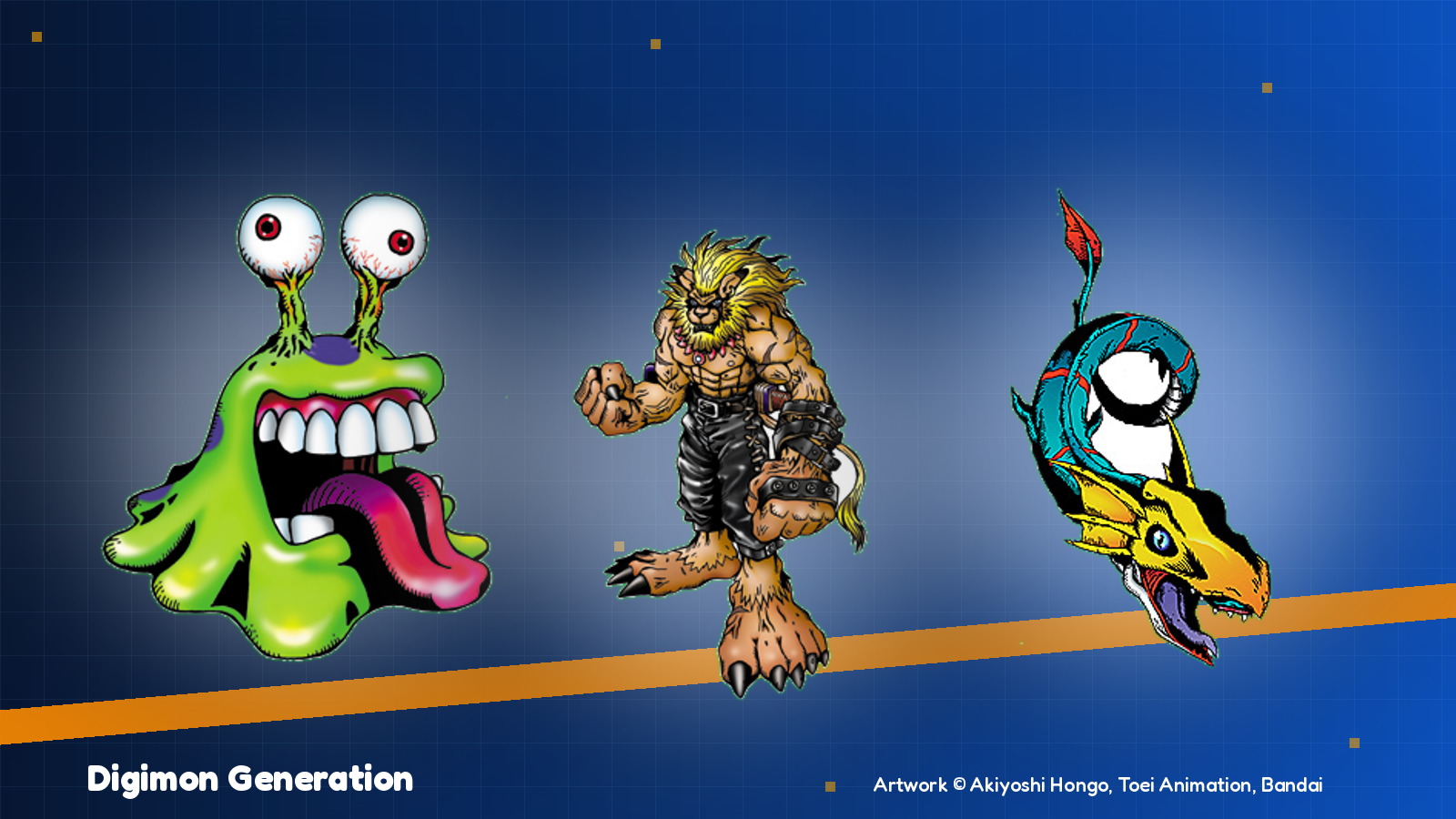
- Nature Spirits: Leomon is the classic example of a proud beast warrior.
- Deep Savers: Seadramon fits the deep-sea serpent theme.
- Nightmare Soldiers: Devimon is the textbook fallen angel of this field.
- Wind Guardians: Birdramon embodies the bird-and-sky identity.
- Metal Empire: Andromon is the archetypal android.
- Virus Busters: Angemon is the holy warrior most fans picture first.
These are field examples only. They tell you which family a Digimon belongs to. They do not promise that a specific Digimon appears on your Pendulum Color. For that, use the roster for your exact version.
What about Nova Red?
A lot of Tamers search “digimon nova red evolution chart.” Color names like Nova Red describe a shell. A chart is built around the version number and field, though, so match your Nova Red unit to the version and field printed on its packaging or shown on its startup screen, then read the chart for that version.
If you bought a loose unit without a box, the roster gives the version away within a few days of raising. A Deep Savers device will quickly start producing water Digimon.
The six levels, in English and Japanese

Pendulum devices are important in Digimon history because the original Pendulum brought a sixth level to the virtual pets. The 1997 Digital Monster topped out at the level fans in the West call Ultimate. The Pendulum went one step further, to Mega.
Japanese sources, including the official Digimon Reference Book, use different names for these levels. The Japanese term “Ultimate” means the English Mega, which causes plenty of confusion when you read imported charts.
| English level | Japanese term | What happens on the device |
|---|---|---|
| Fresh | Baby I | Hatches from the Digi-Egg and evolves on a timer |
| In-Training | Baby II | Still timer-based, care starts to matter |
| Rookie | Child | Your first real branch point |
| Champion | Adult | Shaped by care mistakes and training |
| Ultimate | Perfect | Shaped by battles and win rate |
| Mega | Ultimate | The goal, earned through battling |
If you come across a Japanese guide that says “Perfect,” read it as Ultimate. If it says “Ultimate,” read it as Mega. That one adjustment keeps you from chasing the wrong evolution.
Raising Digimon: the daily loop
Raising a partner on a Pendulum Color follows the same pattern Bandai has used for decades. Your Digimon calls for attention. You respond. Every missed call is a mark against you.
Feeding
Your partner has a hunger meter and a strength meter. Food fills hunger. Protein or strength items fill strength. If either meter sits empty for too long, the device registers a care mistake.
Don’t overfeed out of guilt. Bandai’s virtual pets have tracked weight since 1997. A partner that is overweight or underweight can lose out on the evolutions you want, so check the status screen once a day.
Cleaning
Digimon poop. You flush it. Leave too much on the screen and your partner gets sick. Sickness means medicine, and a run of sickness wrecks your care record. Flush every time you see a pile.
Sleep and lights
Every Digimon has a bedtime. When it falls asleep, turn the lights off. Leaving the lights on through the night is one of the most common care mistakes, and it is completely avoidable. The device chirps to remind you.
Training by shaking
This is where the Pendulum family stands apart. Training is physical. You shake the device, and the motion sensor counts the effort. A Tamer who carries the device on a commute will out-train one who leaves it on a desk.
Training feeds into evolution and battle performance. A well-trained Rookie heads toward the strong Champion branches. An untrained one can drift toward weaker options.
Tamer tip
Shake in short, steady bursts rather than wild flailing. You want clean, countable motion, and you don’t want to drop a collectible device on concrete.
How evolution actually works
People ask “how do I get Digimon X” more than anything else. The honest answer is that on Bandai’s virtual pets, you don’t choose an evolution directly. You meet conditions, and the device chooses for you based on how you raised your partner.
The model has held steady since the first Digital Monster:
- Fresh to In-Training to Rookie: mostly time. Your partner evolves after it has been alive for long enough.
- Rookie to Champion: care mistakes and training. Few mistakes plus plenty of training unlocks the strong branches. Sloppy care pushes you toward weaker Digimon.
- Champion to Ultimate: battles. The device looks at how many battles you have fought and how many you have won.
- Ultimate to Mega: more battling and stronger results. This is where casual raising usually stalls.
The exact thresholds, such as how many mistakes count as “too many” and how many wins you need, are set per device and per version. Your leaflet and a verified version-specific chart are the authority on those numbers. The order of priorities never changes, though. Care comes first, training next, and battles last.
The care-mistake trap
The best-known example of bad care comes from the original 1997 Digital Monster Ver. 1. Raise a Rookie badly there and you get Numemon, the slug-like Champion every Tamer of that era remembers. Numemon still has a route forward on Ver. 1, evolving into Monzaemon at Ultimate. That shows how the virtual pets let poor care lead to odd but real paths rather than dead ends.
Numemon is mentioned here as a lesson from the original Digital Monster, not as a Pendulum Color roster entry. The lesson does carry over. On Bandai devices, a messy care record steers your partner away from the iconic lines and toward the oddballs.
A step-by-step plan for your first Mega
Here is a game plan that works across Pendulum-style devices. It is built around the priorities above, without inventing numbers.
How to aim for a Mega on the Digimon Pendulum Color
- Confirm your version and field from the box or startup screen.
- Answer every call during the Fresh and In-Training stages to build a clean record.
- Flush every pile and give medicine the moment your partner falls sick.
- Turn the lights off at bedtime every single night.
- Shake-train daily so your Rookie heads toward a strong Champion.
- Keep weight in a healthy range by checking the status screen.
- Battle often once you reach Champion and protect your win rate.
- Keep battling at Ultimate until the device evolves you to Mega.
Steps 2 to 4 matter most. Most failed Mega runs fall apart in the first two days, long before the first battle. A clean early record keeps your options open, while a messy one closes the best branches before you even reach Rookie.
Battles and your win rate
Battles are the engine of the late game. Once your partner reaches Champion, every fight counts toward Ultimate and then Mega. The device tracks both the number of battles and how many you win.
That is why win rate matters as much as volume. A Tamer who fights a lot but loses most of those fights can stall at Ultimate. A Tamer with fewer fights and a high win rate can push further.
To keep your win rate high:
- Battle when your partner is healthy. A sick or starving Digimon is a losing Digimon.
- Train before big battle sessions. Strength from training carries into fights.
- Don’t battle while overweight or exhausted. Check the status screen first.
Attributes in the wider franchise
Every Digimon has an attribute: Vaccine, Data, Virus or Free. In video games such as the Digimon Story series, these follow a triangle where Vaccine beats Virus, Virus beats Data and Data beats Vaccine. Free sits outside that loop.
How much attribute matchups affect a given virtual pet’s battle math varies from device to device, so treat the triangle as general franchise knowledge and not a guaranteed Pendulum Color rule. Your leaflet tells you whether attribute advantage applies to your unit.
Reading a Pendulum Color evolution chart
Charts for this device follow a common layout. If you know how to read one, you can quickly see what went wrong when your partner evolves into something you didn’t expect.
How charts are laid out
Most charts run left to right or top to bottom by level. Fresh is at one end and Mega at the other. Lines connect each Digimon to what it can become, and each connection usually carries a condition.
| What a chart line shows | What it usually means |
|---|---|
| A line from Rookie to Champion | One possible branch based on care and training |
| Several lines from one Rookie | Multiple outcomes depending on your care record |
| A line from Champion to Ultimate | Requires a battle count and win rate |
| A line from Ultimate to Mega | The final battle-driven step |
| A “low care” or “mistake” note | The branch you get from sloppy raising |
Branches split the most at Rookie and Champion. Those two stages decide what kind of Digimon you end up with. By the time you are battling for Ultimate, the main shape of your line is already set.
Spotting a bad chart
The Digimon fandom is full of homemade charts, and they are not all accurate. Watch for these warning signs:
- No version listed. A chart that doesn’t name the field could be mixing two devices.
- Anime evolutions on a toy chart. The anime and the virtual pets often give the same Digimon different lines.
- Suspiciously exact numbers with no source. Real thresholds come from the device and its documentation.
That last point causes the most confusion. Many fans know evolution lines from “digimon adventure,” where Agumon becomes Greymon. On a virtual pet, the same Digimon can branch differently, because the toys follow their own rules. Our “digimon evolution chart” guide covers the major anime lines if you want to compare.
Pendulum Color versus other Digimon devices
The Pendulum Color sits in a crowded family of Bandai hardware. It helps to know where it fits before you buy, especially since “digimon toy” listings often blur the lines between different devices.
| Device family | What sets it apart |
|---|---|
| Digital Monster (1997) | The original virtual pet, topping out at Ultimate |
| Digimon Pendulum (1998) | Added shake training, fields and the Mega level |
| Digimon Pendulum Color | Color display on the Pendulum formula |
| Anime-style Digivices | Toy versions of the partner devices from the shows |
The first two rows are firm history. The 1997 original created the formula, and the 1998 Pendulum expanded it with motion training and the Mega level. The Pendulum Color brings that second-generation design up to date with a modern screen.
Anime-style Digivices are a different product family. They imitate the devices the DigiDestined carry on screen, and they don’t always raise Digimon the way a Pendulum does. If the difference between them interests you, our “digivice works” explainer breaks down how each version functions across the franchise. Collectors who like wearable gear should also look at our “digimon watches” roundup, since several Bandai devices blend pedometer and pet features.
Is the Pendulum Color worth it?
Yes, if you loved the original Pendulum or want the most readable way to play it today. The color screen fixes the biggest complaint about the old hardware, which was squinting at sprites to work out what you had raised. The shake-to-train loop is as satisfying as it was in 1998.
It is less of a fit if you want depth like the console games offer. A virtual pet has no story, no huge roster and no deep stat menus. If you want to plan evolutions with full control, the Digimon Story games give you that freedom. Our “evolve agumon digimon story” guide shows how differently evolution works there, with level and stat requirements you can see and plan around.
For collectors, the Pendulum Color makes a strong centerpiece. It pairs well with a shelf of figures. If you are building that display, our “digimon figure” guide lists the best pieces for showing off your favorite partners next to the device that raised them.
Who should skip it
Skip it if you want a set-and-forget toy. Every Bandai virtual pet punishes neglect. If you can’t check in a few times a day, your partner will pile up care mistakes, and the Mega you were after will slip away. Busy Tamers often get more enjoyment from the console games.
Common evolution problems and how to fix them
When a partner evolves into something unexpected, there is almost always a clear cause. Here are the problems Tamers hit most often.
| Problem | Likely cause | Fix for next time |
|---|---|---|
| Weak Champion instead of a strong one | Too many care mistakes or too little training | Answer every call and shake-train daily |
| Stuck at Champion | Not enough battles | Battle regularly once you reach Champion |
| Stuck at Ultimate | Win rate too low | Battle healthy and trained, not sick or hungry |
| Partner keeps getting sick | Poop left on screen | Flush every pile right away |
| Branch closed off early | Lights left on overnight | Turn the lights off at every bedtime |
Every fix on this list involves care. The battle-related problems usually start earlier too, because a partner raised carelessly loses more fights. Get the daily loop right and most late-game problems never come up.
Tamer tip
Keep a tiny notebook or phone note of care mistakes for your first raise. Once you see exactly where things slipped, your second partner almost always evolves better.
How the Pendulum fits Digimon history
The Pendulum is a big part of why the franchise looks the way it does. The fields it introduced, Nature Spirits, Deep Savers, Nightmare Soldiers and the rest, became a lasting way to sort Digimon. Card game fans still see those names printed as traits today.
The Pendulum’s Mega level also changed the shape of every Digimon evolution line. Once the virtual pets had six levels, the whole franchise could use them. The anime eras, from “digimon adventure” onward, built their climactic battles around Mega forms.
Picking up a Pendulum Color connects you to that history. You raise Digimon by the same rules Tamers learned in the late 1990s, with a screen that finally does the sprites justice.
FAQ
What is the Digimon Pendulum Color?
It is a color-screen virtual pet built on Bandai’s 1998 Digimon Pendulum formula. You raise a Digimon from egg to Mega by feeding it, cleaning up after it, managing its sleep, training it by shaking the device and battling.
How do I get a Mega on the Pendulum Color?
Keep care mistakes as close to zero as you can, train daily by shaking, then battle often with a high win rate once you reach Champion. Care decides your Champion, and battles decide your Ultimate and Mega. Your leaflet lists the exact thresholds for your version.
Does the shell color change which Digimon I get?
Charts organize Digimon by version and field, not by shell nickname. If you own a Nova Red or any other colored unit, find the version number and field on the packaging or startup screen, then use the chart for that version.
Why did my Digimon evolve into the wrong thing?
It nearly always comes down to care. Too many mistakes or too little training at Rookie pushes you toward weaker Champion branches. Too few battles or a low win rate stalls you at Champion or Ultimate.
Can my Digimon die on the Pendulum Color?
Neglect has been able to end your partner’s life on Bandai virtual pets since the original 1997 Digital Monster. Check in several times a day, keep your partner fed and healthy, and you can avoid it.
Are anime evolution lines the same as the Pendulum Color’s?
Not always. The anime, each video game, the card game and the virtual pets can give the same Digimon different evolution lines. Always check a chart for your specific device version instead of relying on what you remember from the shows.