
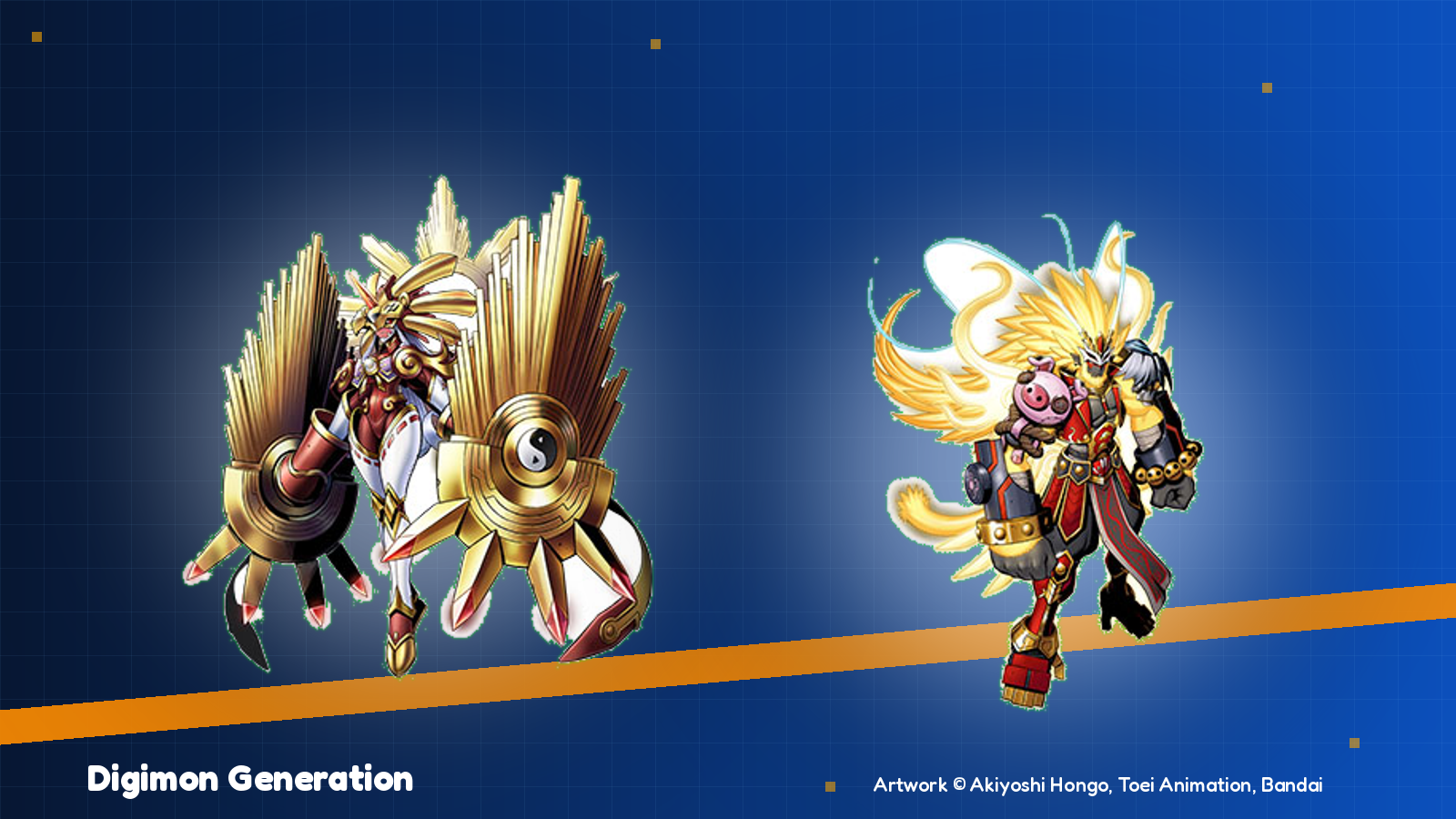
EX12 card list and key cards
EX12 is the Digimon Card Game Extra Booster titled Digital World Shambala, a small-format set built around a hidden paradise in the Digital World, with Amaterasumon and Seitengokuumon as its headline Digimon and Hiro Amanokawa from Digimon Ghost Game as its featured Tamer. This page breaks down what the set contains, how its rarities work, which cards you should actually be looking for, and how it fits next to the other extra boosters.
What EX12 actually is
Extra Boosters sit beside the main Booster line in the Digimon Card Game. They are smaller, tighter releases with a single theme instead of a broad cross-section of the whole franchise. EX12 follows that pattern. Where a main booster spreads support across a dozen colours and archetypes, Digital World Shambala focuses on one corner of the Digital World and a handful of evolution lines inside it.
The Shambala name tells you the flavour before you open a pack. Shambala is the hidden kingdom of Tibetan Buddhist legend, a paradise sealed away from the ordinary world. That fits the set’s two signature Digimon. Amaterasumon takes its name from the Shinto sun goddess, and Seitengokuumon carries “seitengoku”, a holy heaven, right in its name. You are opening a set about a divine, closed-off Digital World, and the card art reflects that.
The Tamer side anchors the set to Digimon Ghost Game. Hiro Amanokawa, Gammamon’s partner, is the human face of EX12. If you watched Ghost Game, you already know the tone: eerie, mythological, full of Digimon that behave like folklore spirits. That is exactly the register Digital World Shambala leans into.
| Set data | EX12 |
|---|---|
| Full name | Extra Booster Digital World Shambala |
| Set code | EX12 (also written EX-12) |
| Card number format | EX12-001 and upward |
| Cards per pack | 12 |
| Packs per box | 24 |
| Rarities | Common, Uncommon, Rare, Super Rare, Secret Rare, plus parallel art |
| Format legality | Standard legal, like every other Extra Booster |
You will see the set written as “digimon ex 12”, “digimon ex-12” and “ex12 digimon” across shops and forum posts. They all mean the same product. On the cards themselves, the number prefix is always EX12.
Who Hiro Amanokawa is and why he headlines a card set
Hiro is the protagonist of Digimon Ghost Game, the anime that ran from October 2021 to March 2023 across 67 episodes. His father, a researcher, vanishes into the Digital World and leaves Hiro a Digivice-V and a Digimon partner named Gammamon. The series is structured like a horror anthology: each episode is a “hologram ghost” incident in the human world, and the kids investigate it.
Hiro’s defining trait is calm. He is not the loud shonen lead. He observes, thinks, and talks to Digimon rather than charging at them. That personality maps cleanly onto how Tamer cards usually work in the game, where the Tamer sits on the board and quietly generates value each turn.
Gammamon is Hiro’s partner and one of the most unusual Rookies in any anime. Instead of a single Champion, the anime gives him three regular Champion forms plus a dark one. If you own a Ghost Game-era deck already, you know how well that branching plays in the card game, because it rewards flexible digivolution lines.
Hiro’s partner line in the anime
| From | To | Medium |
|---|---|---|
| Gammamon | BetelGammamon | Digimon Ghost Game |
| Gammamon | KausGammamon | Digimon Ghost Game |
| Gammamon | WezenGammamon | Digimon Ghost Game |
| Gammamon | GulusGammamon | Digimon Ghost Game |
| BetelGammamon, KausGammamon or WezenGammamon | Canoweissmon | Digimon Ghost Game |
| Canoweissmon | Siriusmon | Digimon Ghost Game |
Those are the anime lines, and the anime is the medium that matters for EX12’s flavour. The card game has historically modelled Gammamon’s three-way split by letting Champion Gammamon forms digivolve from Gammamon at the same cost, so you can hold whichever one fits the board. Check the printed digivolution cost on each EX12 card rather than assuming it matches an older printing, because costs do shift between sets. For the broader picture of how this line connects to Ghost Game’s other partners, our digimon evolution chart lays the whole Gammamon tree out next to Angoramon and Jellymon.
The headline Digimon: Amaterasumon and Seitengokuumon
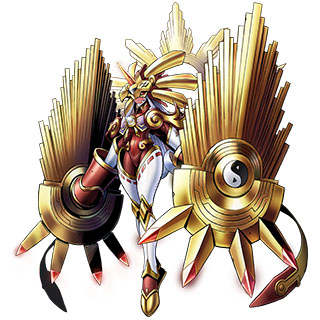
Every Extra Booster has a cover star, and EX12 gives you two. Both are tied to the Shambala setting rather than to a specific anime arc, which is why you will not find them in the Ghost Game episode list.
Amaterasumon is the sun deity card. Its naming follows the same pattern as other Japanese-myth Digimon such as Susanoomon, and the art direction sells it as a radiant ruler of the hidden Digital World. Treat it as the top-end finisher of the set. In Extra Boosters, the cover Digimon is nearly always printed at Super Rare with a Secret Rare or parallel art version, and that is where EX12’s chase value concentrates.
Seitengokuumon is the second pillar. The “holy heaven” in its name points to the same divine theme, and the two cards are clearly designed as a pair, the way EX-04 paired its Alternative Being leads or EX-06 built Infernal Ascension around a matched set. Expect Seitengokuumon to be the card that supports or sets up Amaterasumon in the same colour family, rather than a rival archetype.
Because these two are new to most players, the levels, attributes and types printed on their EX12 cards are the authority. The Digimon Reference Book entries and the card text can differ in small ways, so when you build around them, read the card in hand. I will not list numbers for these two that I cannot verify against the printed cards, and you should hold every list you read online to that same standard.
Tamer tip
Open one pack from a fresh box and read the two headline cards fully before you buy singles. The Super Rare printing and the parallel art are always the same card text, so buy the cheapest version for play and the pretty one only if you collect.
Metal Empire and Virus: the set’s mechanical identity
Beyond the deity theme, the topic words that keep coming up around EX12 point to two mechanical threads. One is the Metal Empire trait. The other is the Virus attribute.
Metal Empire is one of the field traits printed on Digimon cards, alongside groups like Nature Spirits, Nightmare Soldiers and Virus Busters. Cards that reference Metal Empire usually ask you to stack Digimon sharing that trait, and they tend to reward mechanical, armoured lines. A hidden Digital World guarded by mechanised Digimon is a very Shambala idea, and it gives the set a second colour lane beside the divine lead cards.
Virus is one of the four attributes: Vaccine, Data, Virus and Free. In the card game, attribute is mostly a tagging tool. A card that says “when a Virus Digimon digivolves” only cares about the attribute line, so a Virus-heavy EX12 pulls old Virus Digimon back into play. If you already run a Dark Area or Nightmare Soldiers shell, that is the lane to watch in this set.
Common keywords you will see on EX12 cards
| Keyword | What it does | Why it matters in EX12 |
|---|---|---|
| Security check | Your opponent’s attack flips the top card of your security stack | The set’s Digimon with security effects shape how safe your five cards are |
| Blocker | Can redirect an attack to itself | Common on armoured Metal Empire bodies |
| Digi-Burst | Trash digivolution cards for an effect | Suits deity lines that stack high and then spend sources |
| Overflow | Lose memory when the card leaves play from under a Digimon | Appears on high-value Super Rares to balance them |
These are the standard effect keywords the game has used for several years. EX12 does not need a new mechanic to be interesting. Its interest comes from pairing established keywords with a new deity archetype and a Ghost Game Tamer.
How the EX12 card list is organised
An Extra Booster list reads the same way every time, and once you learn the shape you can scan a full ex12 digimon card list in under a minute.
Cards are numbered EX12-001 onward. The list runs by colour in the game’s fixed order: red, blue, yellow, green, black, purple, white, then multi-colour. Within each colour it runs by level from Digi-Egg through Mega, then Tamers, then Option cards. Each card carries a rarity mark. Parallel art versions keep the same number as the regular printing, which is why an EX12 list shows some numbers twice.
How to read an EX12 card number
- Find the prefix: EX12 tells you the set.
- Read the three digits: lower numbers are red, higher numbers are purple and multi-colour.
- Check the rarity mark beside the number: C, U, R, SR or SEC.
- Look for a parallel symbol: alt art shares the number with the regular card.
- Confirm the colour bar on the card itself when sorting, because number ranges are only a guide.
Rarity tiers in the set
| Rarity | Mark | What you get in EX12 |
|---|---|---|
| Common | C | The bulk of the set: Digi-Eggs, Rookies, basic Champions and cheap Options |
| Uncommon | U | Mid-line Champions and Ultimates, most Tamer printings |
| Rare | R | Key Ultimates, strong Options and the better Tamer cards |
| Super Rare | SR | The Megas, including the headline deity Digimon |
| Secret Rare | SEC | The chase card, normally a top-line Mega with unique art |
| Parallel art | Same number | Alternate art for selected cards at every tier |
Super Rares and the Secret Rare are where price lives. A sealed box gives you a predictable spread of Commons and Uncommons, a handful of Rares and a short stack of Super Rares. Secret Rares are not guaranteed per box, so if you want Amaterasumon in its chase printing, budget for it as a single rather than hoping on a box.
Key cards to pull from EX12
You do not need every card. Here is how a working Tamer sorts a Digital World Shambala box into “play”, “trade” and “bulk”.
Play pile
The Hiro Amanokawa Tamer card goes straight into the play pile. Tamer cards from Extra Boosters have a long shelf life because they are usually printed once. A Tamer that supports Gammamon-line digivolution feeds every Ghost Game deck you own.
Amaterasumon at Super Rare is the deck’s top end. One copy is enough to test. Most deity archetypes in this game want to reach one Mega and protect it, not drop three of them.
Seitengokuumon is the enabler, and enablers are the cards you want in multiples. Three copies is the safe number for a card that sets up your finisher.
Any Metal Empire Blocker at Common or Uncommon belongs in the play pile too. Cheap blockers are what let a slow deity deck survive early aggression long enough to digivolve.
Trade pile
Parallel art Rares and Super Rares of cards you already hold at regular rarity. Ghost Game alt arts in particular hold value well with collectors, because the series has a dedicated fan base and fewer card printings than Adventure or Tamers.
Bulk pile
Vanilla Commons with no effect text, and Options that only matter inside a specific Shambala archetype you are not building. Keep one set of each for cube or casual decks and move on.
Tamer tip
Sort by colour first, then by rarity. Sorting a fresh EX12 box by card number instead wastes time because the parallel arts break up the sequence.
How EX12 compares with earlier Extra Boosters
Extra Boosters have changed a lot since EX-01. The early ones were reprint-heavy collections built to put classic lines into the game. The recent ones are tightly themed mini-sets with their own stories. EX12 belongs to the second group.
| Set | Theme | What it added |
|---|---|---|
| EX-01 Classic Collection | Adventure-era classics | Reprints and new art for the original partners |
| EX-02 Digital Hazard | Guilmon and the Hazard line | Megidramon and Gallantmon support |
| EX-03 Draconic Roar | Dragon Digimon | Dragon’s Roar trait decks |
| EX-04 Alternative Being | X-Antibody Digimon | X-Antibody mechanics |
| EX-05 Animal Colosseum | Beast Digimon | Animal and Nature Spirits lines |
| EX-06 Infernal Ascension | Seven Great Demon Lords and Dark Area | Demon Lord stacking |
| EX-07 Digimon Liberator | The Liberator web comic | Original Liberator characters and partners |
| EX-08 Chain of Liberation | Liberator continued | Second wave of Liberator lines |
| EX-09 Versus Monsters | Rival pairs | Head-to-head archetype design |
| EX12 Digital World Shambala | Hidden deity Digital World | Amaterasumon, Seitengokuumon, Hiro Amanokawa |
The closest comparison for EX12 is EX-06 Infernal Ascension. Both sets build a whole mini-universe around a divine or demonic hierarchy rather than reprinting an anime cast. If you enjoyed building around the Demon Lords, the Shambala deities will scratch the same itch from the opposite end of the moral spectrum.
The second comparison is the Ghost Game material in the main Booster line. Earlier sets gave Gammamon, Angoramon and Jellymon their first card game lines. EX12 does not replace those cards. It extends the Hiro side with a new Tamer and gives you a reason to revisit the deck.
Why Shambala matters to the wider franchise
Digimon has always treated the Digital World as layered. Adventure gave you File Island and the Server continent. Tamers gave you the layered Digital World ruled by the Sovereigns. Ghost Game stayed almost entirely in the human world and only hinted at where Hiro’s father had gone. Shambala reads like an answer to that hint: a sealed Digital World that only certain Digimon and certain humans can reach.
That framing also connects forward. The current anime, Digimon Beatbreak, continues the trend of treating the Digital World as something close to a hidden layer under modern life rather than a far-off fantasy realm. If you want to understand where the franchise is heading, the digimon beatbreak guide on this site covers the new series, and EX12 shows how the card game is building its own lore in parallel.
The card game’s original settings matter more than they used to. The Liberator sets proved that fans will buy into a story that exists only in card art and web comics, and Digital World Shambala takes that confidence further by introducing deities with no anime appearance at all. For a collector, that means EX12 cards are the first and possibly only printing of these Digimon for a long time. For a player, it means a self-contained archetype that does not depend on owning older boosters.
If you are new to how all of this fits together, our digimon tcg explainer walks through memory, security and digivolution from scratch before you spend money on a themed set.
Buying EX12: boxes, packs and singles
Boxes are the right buy if you want the Commons and Uncommons for a full Shambala deck plus a realistic shot at the Super Rares. Twenty-four packs of twelve cards gives you the full Common and Uncommon spread in nearly every box.
Single packs are a bad buy for value. They are a good buy for fun, especially at a locals night where the pack prize is on the line. If you want a specific Super Rare, the singles market on release weekend is almost always cheaper than ripping packs for it.
Pre-release and release-week prices on Amaterasumon and Seitengokuumon will spike and then settle within a month, which is the normal curve for Extra Booster chase cards. Buy the regular Super Rare on release if you need it to play, and wait on the Secret Rare and parallel art if you only want them for the binder.
English releases of Extra Boosters follow the Japanese release by a gap of several months. If you see EX-12 listed as already out when your local store has nothing, check whether the listing is for the Japanese printing. Japanese cards are legal in some regional events and not in others, so confirm with your tournament organiser before building around imports.
FAQ
What does EX12 stand for?
EX is the Digimon Card Game’s code for Extra Boosters, and 12 is its place in that line. EX12 Digital World Shambala is the twelfth Extra Booster. The same set is written EX-12 on Japanese product and in some shop listings.
Who is the main Tamer in EX12?
Hiro Amanokawa, the protagonist of Digimon Ghost Game and partner of Gammamon. His Tamer card is the set’s link to the anime, and the Shambala deity Digimon are original to the card game.
Are Amaterasumon and Seitengokuumon from an anime?
No. Neither appears in Ghost Game or any other series. They were created for the Digital World Shambala setting, and their levels, attributes and types are defined by the EX12 cards themselves. Read the printed card rather than trusting third-party stats.
How many cards are in a pack and a box?
Twelve cards per pack and 24 packs per box, the same as every other Digimon Card Game booster and Extra Booster.
Is EX12 legal in standard format?
Yes. Extra Boosters are standard legal from their release date. Check your event rules if you are using Japanese-language EX-12 cards, because regional policy on imported cards varies.
Should I buy a box or singles?
Box if you want to build the Shambala archetype from the ground up and enjoy opening packs. Singles if you only need the Special Rare Amaterasumon (EX12-047), the Hiro Tamer or a few Metal Empire blockers for an existing deck.