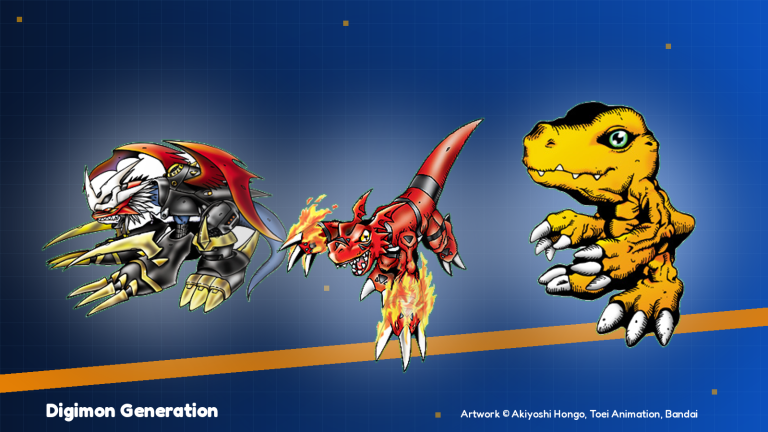
Digimon Story Time Stranger evolution chart and how to digivolve Agumon
The Digimon Story Time Stranger evolution chart is a branching tree rather than a ladder: each of the game’s 450-plus Digimon can digivolve into several forms, every one gated by a Level target, stat thresholds and, on some routes, your Bond with the Digimon. Agumon, the starter most Tamers grab first, splits early into GeoGreymon (a form also reachable from Guilmon and Huckmon, and the first step toward RizeGreymon and ShineGreymon) or Greymon (which branches again into MetalGreymon, SkullGreymon, Megadramon or Kimeramon, with WarGreymon and, through DNA digivolution, Omnimon waiting beyond MetalGreymon rather than at the end of a simple Adventure-style chain). This guide covers the PS5, Xbox Series X|S and PC release of Digimon Story: Time Stranger, explains how the chart works, lists every classic Rookie’s Champion options and walks Agumon’s full line form by form.
How the evolution chart works in Time Stranger
Time Stranger launched on 3 October 2025 and follows the Digimon Story formula that Cyber Sleuth and Hacker’s Memory built: no Digimon is locked to one partner-style line. Open the digivolution menu for any Digimon and you see a panel of possible next forms, each with its own list of requirements. Anything greyed out tells you exactly which number you still have to hit. Meet every condition, confirm, and the Digimon changes form on the spot, keeping the skills it has learned so far as inherited skills. That inheritance is the whole reason the chart matters: a Digimon that has walked through several forms arrives at Mega with a far better move pool than one that went straight up a single branch.
Requirements come in three flavours. The Level target is the obvious one, and in Time Stranger the Level a Digimon can reach rises with each stage, so a Rookie that hits its cap simply cannot grow until it digivolves or you reset it. Stat thresholds are the second gate, and they are where most players stall. A physical line like Greymon leans on ATK, a holy line like Angemon leans on INT, speedy birds lean on SPD, and the game will not let you fudge it. The third gate is Bond, the friendship meter that replaces the old CAM percentage from Cyber Sleuth. Certain routes, especially the ones that mirror an anime partnership, want a healthy Bond before they unlock, which you build by keeping the Digimon in your active party, winning fights and talking to it rather than leaving it benched for ten hours.
You are never stuck with a choice. De-digivolving sends a Digimon back a stage, lets it keep its inherited skills, and the game rewards the loop: a Digimon that has been de-digivolved and raised again comes back with better growth, so the stiff thresholds on Ultimate and Mega forms are designed to be met across several cycles, not one straight climb. If you want the deeper theory of what digivolution actually represents in the lore, our “digimon evolution” explainer covers that; this page is about the game’s numbers and routes.
Tamer tip
Read the greyed-out requirement before you grind. The game tells you the exact stat that is short, so a Digimon with the wrong Personality for that stat should be swapped to a matching one early rather than levelled another ten times.
Agumon evolution line in Time Stranger
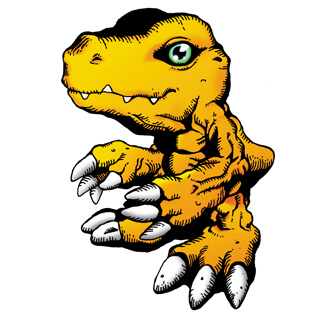
Agumon is the Vaccine reptile that opened the franchise in 1999 and it is still the Digimon most new Tamers choose at the start of Time Stranger. In the anime its signature attack is Pepper Breath (Baby Flame), a fireball spat from the mouth, and the game keeps that identity by making Agumon a physical attacker who scales off ATK. That matters for the chart, because almost every worthwhile Agumon route asks for ATK rather than INT. Agumon has three serious Champion options in the game plus one famous dead end.
| Form | Level | Attribute | Where this route comes from |
|---|---|---|---|
| GeoGreymon | Champion | Vaccine | Digimon Data Squad (Savers) anime, 2006 |
| Greymon | Champion | Vaccine | Digimon Adventure anime, 1999 |
| Tyrannomon | Champion | Data | Original virtual pet lines, appears across the Story games |
| Numemon | Champion | Virus | The classic “you raised it badly” result from Digimon World, kept in Story games |
The table above lists what Agumon can become in Time Stranger specifically. The anime lines are much narrower: Adventure gives Agumon only Greymon, MetalGreymon and WarGreymon, while Data Squad gives Marcus’s Agumon GeoGreymon, RizeGreymon and ShineGreymon. The game hands you both, and a third path through Tyrannomon to MasterTyrannomon for anyone who likes the old-school dinosaur look.
GeoGreymon route: Agumon to ShineGreymon
GeoGreymon is the sharper, spikier Greymon design from Data Squad and it is the stronger early pick in Time Stranger for one reason: its ATK is high at the point in the game where every boss is a stat check. GeoGreymon’s Ultimate is RizeGreymon, a cyborg dinosaur with a revolver arm, and RizeGreymon’s Mega is ShineGreymon, the light dragon that ended Data Squad. The whole line is Vaccine from top to bottom, which gives it a clean advantage against the Virus bosses that crowd the mid game, and it never asks you to switch stat focus, so an ATK-heavy Personality carries you from the first fight to the credits.
How to get GeoGreymon in Digimon Story: Time Stranger
- Open the digivolution menu from your Digimon roster and select Agumon.
- Pick the GeoGreymon panel and note which requirements are still greyed out.
- Level Agumon in the field until the Level requirement turns white.
- Push ATK with battles, stat-boosting items and an ATK-leaning Personality until it clears the threshold.
- Confirm the digivolution; Agumon’s learned skills carry over as inherited skills.
Greymon route: Agumon to WarGreymon and Omnimon
Greymon is the Adventure route and the one most people picture when they hear “agumon evolution line“. In the game Greymon digivolves into MetalGreymon, the Vaccine cyborg with the trident arm and chest missiles, and MetalGreymon digivolves into WarGreymon, the dragon man with the Brave Shield. WarGreymon matters beyond its own stats because it is one half of the most famous DNA digivolution in the series: pair it with MetalGarurumon and you get Omnimon (Omegamon), the Royal Knight who headlined Our War Game in 2000 and remains one of the best Vaccine Megas in Time Stranger. If you want Omnimon, plan a Gabumon line alongside your Agumon from the start so both Megas are ready at the same time.
Tyrannomon route
Tyrannomon is the Data-attribute dinosaur that shows up in every Story game and digivolves to MasterTyrannomon at Ultimate. It is the right choice if you want a Data attacker on a team already full of Vaccines, since attribute coverage wins more fights in Time Stranger than raw numbers do. It is also the cheapest of Agumon’s good routes in terms of requirements, which makes it a useful stopover: digivolve to Tyrannomon, bank a few skills, de-digivolve, then take Agumon up the GeoGreymon branch with a fatter move pool.
Numemon: the trap on Agumon’s chart
Numemon is the green slug that Digimon World players learned to fear in 1999, and Time Stranger keeps it on Agumon’s chart as a Virus Champion with poor stats. It sits there because its requirements are lower than the dinosaur routes, so a Tamer who clicks the first available option gets a slug. The only reason to take it deliberately is a trait or skill you want to inherit on the way to something else, and even then you should de-digivolve straight back out. Treat it as the chart’s reminder to read the panel before you confirm.
Tamer tip
Agumon’s best Mega plan in Time Stranger is both branches, not one. Take GeoGreymon to ShineGreymon first for the early power spike, then de-digivolve and climb Greymon to WarGreymon, so the finished Mega carries skills from two full lines.
Digimon Story Time Stranger starters evolution chart
At the start of Digimon Story: Time Stranger you choose a starting partner, and the options include the classic Adventure Rookies: Agumon, Gabumon, Biyomon (Piyomon), Tentomon, Palmon, Gomamon and Patamon. Because the chart is open, your starter choice is about the first ten hours rather than the whole game, but those ten hours are where most players either fall in love with the game or bounce. The table below gives the headline Champion for each starter in the game plus the extra early Rookies you will meet in the field around the same time, so you can see which lines are ready for the first boss fights. Every line here is confirmed in the game’s chart, and the “anime Champion” column shows where each one comes from so you can tell the classic partner forms from the new game routes.
| Rookie (Japanese) | Attribute | Anime Champion | Other Champion routes in Time Stranger | Stat the main route wants |
|---|---|---|---|---|
| Agumon | Vaccine | Greymon (Adventure) | GeoGreymon, Tyrannomon, Numemon | ATK |
| Gabumon | Vaccine | Garurumon (Adventure) | Multiple, including a Numemon trap | ATK / SPD |
| Biyomon (Piyomon) | Vaccine | Birdramon (Adventure) | Aquilamon and other bird lines | SPD |
| Tentomon | Vaccine | Kabuterimon (Adventure) | Insect and machine routes | ATK |
| Palmon | Data | Togemon (Adventure) | Plant routes | HP / DEF |
| Gomamon | Vaccine | Ikkakumon (Adventure) | Sea animal routes | HP / ATK |
| Patamon | Data | Angemon (Adventure) | Holy and beast routes | INT |
| Veemon (V-mon) | Free | ExVeemon (Adventure 02) | Dragon routes | ATK |
| Hawkmon | Free | Aquilamon (Adventure 02) | Bird routes | SPD |
| Gaomon | Data | Gaogamon (Data Squad) | Beast routes | SPD / ATK |
Three of these deserve a word of warning. Patamon to Angemon is the Rookie-to-Champion jump with the biggest stat payoff in the early game, because Angemon’s INT and holy element shred the Virus and dark-element enemies that fill the first dungeons, but it wants INT, so a Patamon with a physical Personality will sit at the gate for ages. Palmon to Togemon and Gomamon to Ikkakumon are the opposite case: both are tanky Champions that clear their requirements easily and hold the front line while your glass cannons grow, but neither becomes a top Mega without a lot of de-digivolving later. Tentomon to Kabuterimon splits the difference, a solid Vaccine attacker whose Ultimate, MegaKabuterimon, remains useful into the late game.
If you are choosing a starter purely for the long run, Agumon and Gabumon still win because they end at Omnimon together. If you want the easiest first twenty hours, Patamon is the pick. Our “time stranger digimon” list shows every creature in the game with pictures if you want to scout a starter before you commit.
Champion evolution list: 20 Champions you will see first
Champion is the stage where the chart opens up, because every Rookie gets several options and dozens of Champions are reachable from field Digimon you can scan in the first few areas. This is a data sheet of the Champions that come up most in early and mid-game planning, with the Japanese name where it differs. The “common Rookie” column names the Rookie most players use to reach each one in the Story games; several of these Champions have more than one way in on the Time Stranger chart, so treat it as the standard route rather than the only one.
| Champion (Japanese) | Attribute | Common Rookie into it | Why you would want it |
|---|---|---|---|
| GeoGreymon | Vaccine | Agumon | Best early ATK on Agumon’s chart |
| Angemon | Vaccine | Patamon | Holy INT attacker, early boss killer |
| Ikkakumon | Vaccine | Gomamon | High HP tank with ice coverage |
| Togemon | Data | Palmon | Cheap, sturdy plant front-liner |
| Kabuterimon | Vaccine | Tentomon | Reliable physical Vaccine, strong Ultimate |
| ExVeemon (XV-mon) | Vaccine | Veemon | Half of the Paildramon DNA pair |
| Aquilamon | Free | Hawkmon | Fast bird, half of the Silphymon DNA pair |
| Gaogamon | Data | Gaomon | SPD-focused beast from Data Squad |
| Leomon | Vaccine | Elecmon | Well-rounded beast man, iconic anime presence |
| Guardromon | Virus | Hagurumon | Machine tank with solid DEF |
| Turuiemon | Data | Lopmon | Agile beast man from the Tamers side of the roster |
| BlackGatomon (BlackTailmon) | Virus | Salamon | Virus variant of Gatomon with dark coverage |
| Kurisarimon (Chrysalimon) | Virus | Keramon | Step toward Infermon and Diaboromon |
| Dinohyumon | Vaccine | Kotemon | Dragon man swordsman with high ATK |
| Numemon | Virus | Many Rookies | The trap form, useful only for skill transfer |
| Deputymon (Revolmon) | Vaccine | Field scans | Gunslinger mutant with ranged skills |
| Cyclonemon (Cyclomon) | Data | Field scans | One-eyed dragon, cheap Data attacker |
| Deltamon | Virus | Field scans | Three-headed composite with an attack-heavy build |
| Agunimon (Agnimon) | Variable | Field scans | Frontier Hybrid, treated as a Champion in the Story games |
| Tyrannomon | Data | Agumon | Data alternative on the dinosaur chart |
Agunimon is the headline newcomer on this list. The Frontier Hybrids skipped Cyber Sleuth entirely and Time Stranger slots them into the chart at Champion level, so Takuya’s Flamemon line finally has a home in a Story game. Deltamon, Cyclonemon and Deputymon are the kind of Champions you are more likely to scan in the field and digivolve back down from than build toward, which is a legitimate strategy: catching a Champion, de-digivolving it to its Rookie and then climbing a different branch is often faster than raising a Rookie from scratch. Kurisarimon is the one to watch for anyone chasing Diaboromon, since it is the Champion stage of the Keramon line that leads through Infermon.
Ultimate and Mega: planning the top of the tree
Ultimate forms in Time Stranger are where stat thresholds get strict, and Mega forms are where Bond and multi-stat requirements stack on top. You cannot brute force these in one pass on a fresh Rookie, which is why the de-digivolve loop exists. The practical way to read the top of the chart is to pick the Mega you want, trace it back to the Rookie you own, and write down every stat the route asks for. If two of those stats conflict, say a line that wants ATK at Champion and INT at Ultimate, you will want to swap Personality at the stage change rather than trying to grow both at once.
Here is how the Agumon routes resolve at the top in the game, with the anime line each one belongs to:
| Route | Ultimate | Mega | Anime source |
|---|---|---|---|
| GeoGreymon line | RizeGreymon | ShineGreymon | Digimon Data Squad |
| Greymon line | MetalGreymon | WarGreymon | Digimon Adventure |
| Tyrannomon line | MasterTyrannomon | Dinosaur Megas via de-digivolve routing | Virtual pet lines |
| WarGreymon + MetalGarurumon | DNA digivolution | Omnimon (Omegamon) | Digimon Adventure: Our War Game |
ShineGreymon versus WarGreymon is the question every Agumon Tamer ends up asking. WarGreymon is the better long-term answer because it feeds Omnimon, but ShineGreymon comes online with less planning, since the whole GeoGreymon line wants the same ATK focus and never asks you to change course. The Tamer who has time for both should get ShineGreymon first, bank its skills, de-digivolve and then take the Greymon branch for WarGreymon. The site-wide “digimon evolution chart” covers how these same lines behave in the anime and other games if you want to compare the game’s routes against the canonical ones.
DNA (Jogress) digivolution in Time Stranger
DNA digivolution fuses two specific Digimon into one, and Time Stranger keeps the pairs that Adventure 02 and the movies made famous. Both halves need to meet their own requirements before the fused form unlocks, so a DNA Mega is really two full raising projects. The reward is a Digimon that starts with the inherited skills of both parents.
| Result | Partner 1 | Partner 2 | Level of result | Anime source |
|---|---|---|---|---|
| Omnimon (Omegamon) | WarGreymon | MetalGarurumon | Mega | Our War Game (2000) |
| Paildramon | ExVeemon (XV-mon) | Stingmon | Ultimate | Digimon Adventure 02 |
| Silphymon | Aquilamon | Gatomon (Tailmon) | Ultimate | Digimon Adventure 02 |
| Shakkoumon | Ankylomon | Angemon | Ultimate | Digimon Adventure 02 |
Paildramon continues to Imperialdramon Dragon Mode at Mega through a normal digivolution, so the ExVeemon line is the cheapest way into a Mega that hits like a truck. Silphymon and Shakkoumon are worth building for coverage rather than raw power. Omnimon is the one worth the full investment, and the reason the Agumon and Gabumon starters are the strongest pair in the game.
Benefits of digivolving and de-digivolving
Digivolving raises the Level cap, improves the base stats the Digimon grows from, and unlocks the new form’s own skills while keeping the ones you had. Those three benefits compound, so a Mega that has been raised properly will outclass a Mega that was rushed by a margin you can feel in every fight. The extra cost is that higher forms level slower and eat more party memory, which is why a full team of Megas before the mid game tends to be weaker than three Ultimates with good inherited skills.
De-digivolving looks like a loss on paper and is the most important mechanic on the chart. You drop a stage, you keep every inherited skill, and the Digimon returns with a stronger growth profile that makes the next climb easier. That is the designed way to clear the top thresholds, and it is also how you fix a bad branch: a Gabumon that wandered into Numemon costs you nothing but a menu trip. Smart Tamers plan “skill tours” where a Digimon visits two or three Champions purely to collect moves before settling on a line. The cost is time, since you repeat levels you have already earned, so tour early when levels are cheap rather than at the Ultimate stage where each one takes a dungeon.
There is a third benefit that pure chart readers miss. De-digivolving a scanned Digimon down to its Rookie lets you reach forms that are far away from anything you own. Scan a Guardromon in the field, drop it to Hagurumon, and you are suddenly one branch away from machine lines you would otherwise have to hunt for. Scanning and de-digivolving is the fastest way to fill the in-game encyclopedia, and anyone chasing a living dex of all 450-plus Digimon will spend more time in the de-digivolve menu than in the digivolve one.
Reading the chart in-game and planning a team
The in-game chart is your primary planner. Each Digimon’s digivolution screen shows every reachable form one stage up and one stage down, with the exact requirements, and the encyclopedia tracks which forms you have already registered. Two habits make that chart far more useful. First, check a Digimon’s Personality the moment you get it, because Personality decides which stats grow fastest and therefore which routes are cheap; a Rookie with a defensive Personality will hit Togemon or Guardromon early and struggle toward Angemon. Second, look at the Attribute triangle before you commit a team slot. Vaccine beats Virus, Virus beats Data, Data beats Vaccine, and the Free attribute on Digimon like Veemon and Hawkmon sits outside the triangle. A balanced party covers all three, which is another reason Tyrannomon has a place next to the Vaccine-heavy Greymon lines.
For a first playthrough, a team built from the starter chart that works without any de-digivolve tricks looks like this: GeoGreymon as the physical Vaccine attacker, Angemon as the holy INT attacker, and Ikkakumon or Togemon as the front-line sponge, with Gabumon’s line growing toward MetalGarurumon in the reserve. By the time those three hit Ultimate, the stat requirements for Megas will tell you which ones you can reach without a reset, and the de-digivolve loop fills the rest. Ridable Digimon are a separate consideration: some larger forms can be ridden in the field for faster travel, so keeping one on the roster saves real time even if it never fights.
Tamer tip
Keep one spare Rookie at the bottom of a flexible chart, such as a second Agumon, parked at the stat gate for a Champion you have not registered. Every time you need a new form for the encyclopedia or a quick attribute swap, that spare saves a full raise.
Trivia: why Agumon’s chart looks the way it does
Agumon’s Time Stranger chart is a history lesson in miniature. Greymon to MetalGreymon to WarGreymon is the 1999 Adventure line, the one Tai’s partner walked on television. GeoGreymon to RizeGreymon to ShineGreymon is the 2006 Data Squad redesign, made when Bandai wanted Marcus’s Agumon to look distinct from Tai’s. Tyrannomon predates both: it was an evolution option on the original 1997 virtual pet. Numemon is older still in spirit, the punishment form from the first Digimon World on PlayStation, which is why fans still flinch when they see it on a chart. Omnimon arrived in the Our War Game film in 2000 and became the franchise mascot alongside Agumon itself. The Story series has always let one Agumon touch all of these, and Time Stranger is the first game to put them next to the Frontier Hybrids like Agunimon on the same tree, which makes it the broadest single-game “digimon story time stranger” chart Bandai Namco has shipped so far.
FAQ
Does Agumon digivolve into Greymon or GeoGreymon in Time Stranger?
Both. In Digimon Story: Time Stranger, Agumon’s chart offers Greymon (the Adventure route to MetalGreymon and WarGreymon) and GeoGreymon (the Data Squad route to RizeGreymon and ShineGreymon), along with Tyrannomon and Numemon. GeoGreymon is the stronger early pick; Greymon is the route that leads to Omnimon.
What stat does Agumon need to digivolve?
Agumon’s dinosaur routes in Time Stranger ask for a Level target plus an ATK threshold, which the digivolution panel shows exactly. Give Agumon an ATK-leaning Personality and it clears the GeoGreymon gate without special effort.
How do you get Omnimon in Time Stranger?
Omnimon (Omegamon) is a DNA digivolution of WarGreymon and MetalGarurumon in the game, following the Our War Game pairing. Raise an Agumon up the Greymon line and a Gabumon up the Garurumon line to Mega, meet the requirements on both, then fuse them.
Is de-digivolving worth it in Time Stranger?
Yes. It keeps every inherited skill, returns the Digimon with a stronger growth profile for the next climb, and it is the intended way to meet the stat and Bond requirements on Ultimate and Mega forms. It is also how you escape dead ends like Numemon.
Which starter has the best evolution line?
Agumon and Gabumon have the best long-term lines because they converge on Omnimon. Patamon has the best early line because Angemon is the strongest Champion you can reach in the first dungeons. Gomamon and Palmon are the easiest to raise but need more de-digivolving later to reach top Megas.
How many Digimon are in the Time Stranger evolution chart?
Bandai Namco lists more than 450 Digimon in Digimon Story: Time Stranger, every one of them placed on the branching chart with forward and backward routes, including DNA fusions and the Frontier Hybrids introduced to the Story series for the first time.