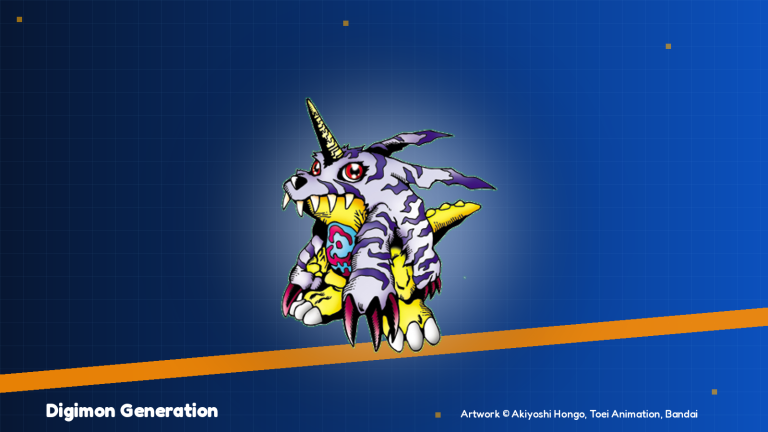
Digimon Story Time Stranger: complete game overview
Digimon Story Time Stranger is Bandai Namco’s 2025 turn-based Digimon RPG, developed by Media.Vision as the spiritual successor to Cyber Sleuth, with a roster of more than 450 Digimon, dual Japanese and English voice acting, and a time-travel plot that bounces between Tokyo and the Digital World of Iliad. It launched on 3 October 2025 for PlayStation 5, Xbox Series X|S and PC via Steam, with Nintendo Switch and Nintendo Switch 2 versions announced afterwards in February 2026 and released on 10 July 2026. I have sunk a frankly unreasonable number of hours into it, so this is the overview I wish I had on day one.
Time Stranger at a glance
Before the deep dive, here is the hard data most people arrive looking for. Everything in this table comes from Bandai Namco’s own announcements and the storefront listings.
| Detail | Digimon Story Time Stranger |
|---|---|
| Developer | Media.Vision |
| Publisher | Bandai Namco Entertainment |
| Release date | 3 October 2025 |
| Launch platforms | PlayStation 5, Xbox Series X|S, PC (Steam) |
| Later platforms | Nintendo Switch and Nintendo Switch 2 (announced post-launch) |
| Genre | Turn-based monster-collecting RPG |
| Digimon roster | Over 450 |
| Voice acting | Japanese and English |
| Engine | Unreal Engine 5 |
| Reveal | Xbox Developer Direct, January 2025 |
The number that jumps out is the roster. Cyber Sleuth shipped with 249 Digimon and the Complete Edition with Hacker’s Memory pushed that to 341. Time Stranger’s 450-plus is the biggest cast any Digimon Story game has ever had, and it is the first in the sub-series with an English dub.
What kind of game is Digimon Story Time Stranger?
If you played Cyber Sleuth, the DNA is instantly familiar. You explore a mix of real-world Tokyo districts and Digital World zones, run into wild Digimon, fight them in turn-based battles with three active party members, scan them until you can convert your own copies in the lab, then raise and evolve them along branching lines. That loop is the heart of every Digimon Story game, and Time Stranger does not mess with it.
What changed is scale and presentation. Cyber Sleuth was built for the PS Vita and it showed, even in the remasters. Time Stranger is a current-generation game from the ground up, with fully 3D fields, Digimon that follow you around and a camera you actually control. The series finally looks like the budget matches the brand.
The “Time” in the title is literal. You play an agent of a special forces organisation called ADAMAS, sent into Tokyo to deal with a monster outbreak. A catastrophe hits, and you are thrown back through time with a mysterious goat-like Digimon named Aegiomon at your side. The entire plot is about unpicking how that disaster happened and whether you can stop it from happening again.
Story and setting
I will keep this spoiler-light, because the mystery is a big part of why the game works.
Tokyo and ADAMAS
The game opens in a modern Tokyo where Digimon appearances have become a hidden crisis. ADAMAS is the agency that quietly handles it, and your custom protagonist is one of its field agents. You pick a name and a male or female look at the start, and from there the story treats you as a capable professional rather than a wide-eyed kid. That tonal shift alone makes Time Stranger feel older than Cyber Sleuth.
The central human character you spend the most time with is Inori Misono, a girl tied up in the events of the catastrophe. Her relationship with the Digital World and with Aegiomon drives most of the emotional beats, and I think she is one of the better-written companions in a Digimon game.
Iliad and the Olympos XII
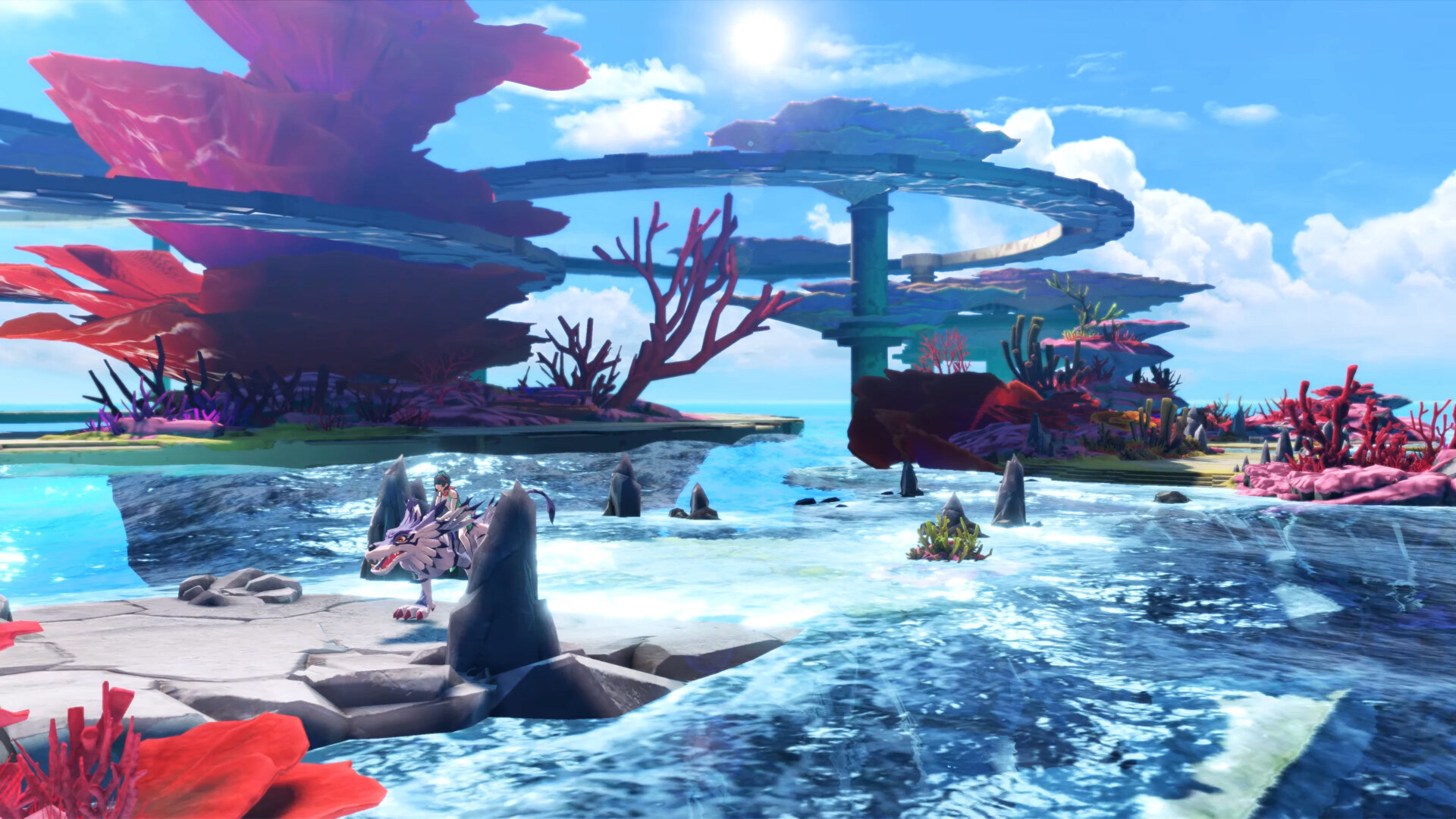
The Digital World in Time Stranger is called Iliad, and it is ruled by the Olympos XII, the twelve god-like Mega level Digimon modelled on the Roman pantheon. Fans of the Digimon Reference Book have waited years for these Digimon to get a proper story spotlight, and Time Stranger delivers it. The Olympos XII are not just bosses; they are political players with their own agendas about humanity and the Digital World.
Here is the full twelve, all Mega level in Bandai’s Digimon Reference Book and in Time Stranger’s story role.
| Olympos XII member | Roman deity basis | Level |
|---|---|---|
| Jupitermon | Jupiter | Mega |
| Junomon | Juno | Mega |
| Minervamon | Minerva | Mega |
| Mercurymon (Mercurimon) | Mercury | Mega |
| Apollomon | Apollo | Mega |
| Dianamon | Diana | Mega |
| Marsmon | Mars | Mega |
| Neptunemon | Neptune | Mega |
| Vulcanusmon | Vulcan | Mega |
| Ceresmon | Ceres | Mega |
| Bacchusmon | Bacchus | Mega |
| Venusmon | Venus | Mega |
The Olympos XII are referred to as higher beings in the game’s own terminology, which is why you will see that phrasing on fan wikis. Which of them you can actually recruit, and how, varies, so check the in-game Field Guide rather than assuming every one is obtainable.
Aegiomon
Aegiomon is the face of Time Stranger, and a smart pick. In the Digimon Reference Book it is a Champion level Vaccine Digimon with ties to the Olympos XII lore, and the game leans on that connection hard. It is a mysterious partner who clearly knows more about the catastrophe than it lets on, and watching that thread unravel is the main reason to keep pushing through the story.
Gameplay: how combat works
Combat is turn-based with a visible turn order, so you can always see who acts next and plan around it. You field three Digimon at once and keep reserves you can swap in mid-battle without losing the turn, which is a huge deal for covering attribute weaknesses on the fly.
Attributes and elements
Two layers of weakness decide most fights. The first is the classic attribute triangle from the Digimon Story games.
| Attacker attribute | Strong against | Weak against |
|---|---|---|
| Vaccine | Virus | Data |
| Data | Vaccine | Virus |
| Virus | Data | Vaccine |
| Free | Neutral to all | Neutral to all |
The second layer is elemental. Time Stranger keeps the Digimon Story element wheel that Cyber Sleuth players will know by heart.
| Element | Beats | Loses to |
|---|---|---|
| Fire | Plant | Water |
| Plant | Water | Fire |
| Water | Fire | Plant |
| Electric | Wind | Earth |
| Wind | Earth | Electric |
| Earth | Electric | Wind |
| Light | Dark | Dark |
| Dark | Light | Light |
| Neutral | None | None |
Stack an attribute advantage on top of an element advantage and the damage difference is enormous. On the hard difficulty, boss fights against the Olympos XII practically demand you build a team around their weaknesses rather than brute forcing with your favourites.
Agent Skills and Cross Arts
Two additions set Time Stranger apart from Cyber Sleuth in battle. Your protagonist is not a passive bystander; as an ADAMAS agent you have Agent Skills, support actions that buff your team, heal, or manipulate the fight from the sidelines. They give you something to do on turns where your Digimon are already set up, and they scale as the story progresses.
Cross Arts are team-up attacks where two of your Digimon combine for a flashy special move. They are the showpiece moments of the combat system and the animations are genuinely gorgeous, especially with Mega level pairs. They are also strong enough that planning your active trio around a good Cross Art pairing is worth the effort.
Scanning and converting
Every wild Digimon you fight gets scanned a little, and the scan percentage builds across encounters. Once it passes 100 percent you can convert your own copy at the lab. Pushing to the 200 percent cap before converting gives you a stronger Digimon, so if you are hunting a specific one, farm the scan rather than converting the moment it unlocks. This is the single most important habit to build early, because strong converted Digimon snowball into easy evolutions later.
Exploration and quests
Fields are proper 3D spaces with hidden items, optional encounters and shortcuts, and your lead Digimon walks behind you. Tokyo districts serve as hubs where you pick up side quests from ADAMAS contacts and civilians, and those quests are where a lot of the funnier Digimon writing lives. Iliad’s zones are bigger and more vertical than anything in Cyber Sleuth, which makes backtracking for scan farming far less tedious than it used to be.
Evolution mechanics
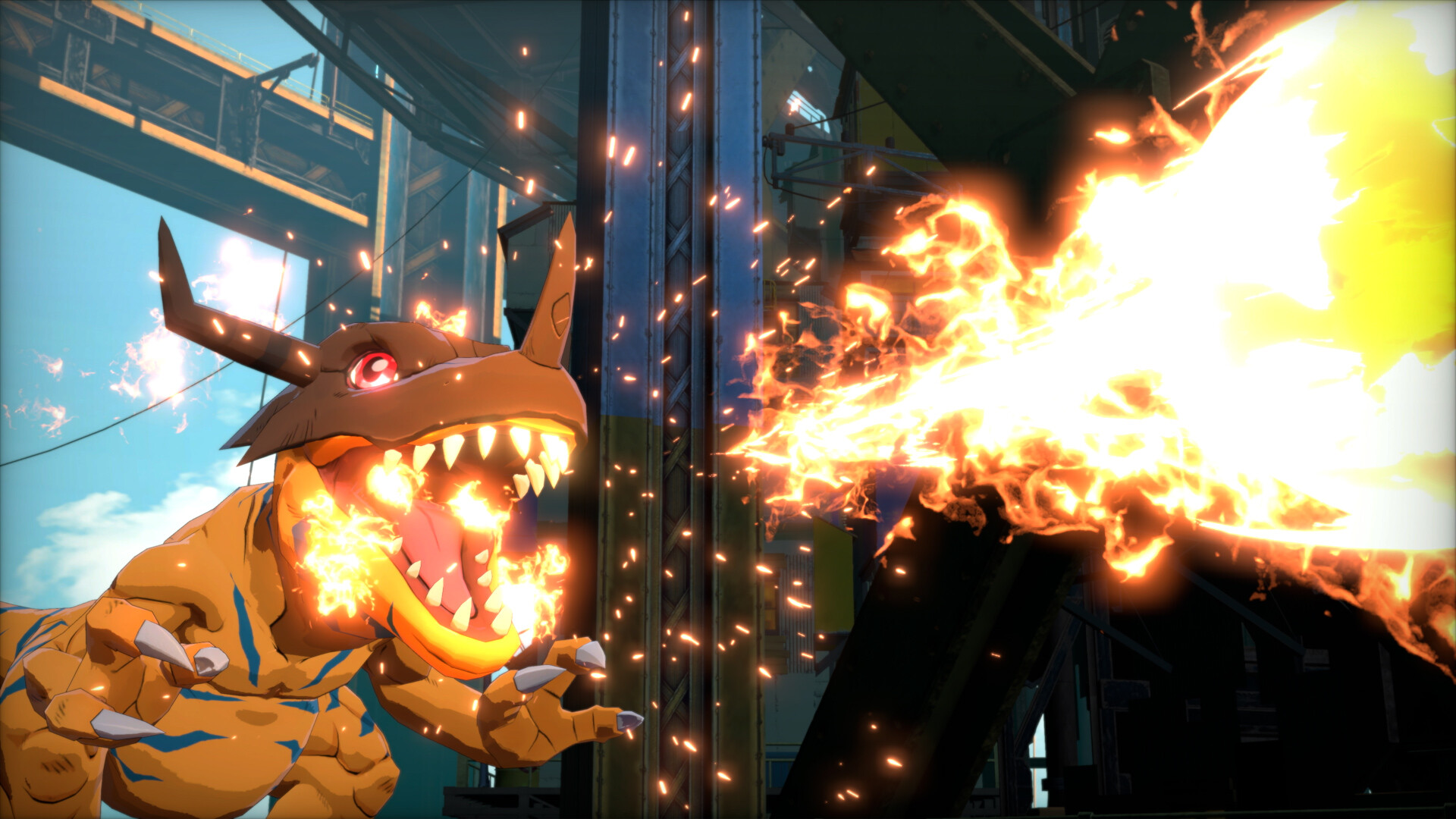
Evolution is where Digimon Story games separate themselves from other monster collectors, and Time Stranger keeps the system I love: evolution is free-form, reversible and gated by growth rather than story. Any Digimon can de-evolve back to a lower level and climb a different branch, which is how you build the exact Mega you want.
How to evolve a Digimon in Digimon Story Time Stranger
- Raise the Digimon to the level listed on its evolution target in the lab menu.
- Meet the stat thresholds shown for that target, training or de-evolving if needed.
- Satisfy any extra condition the game lists, such as ABI or camaraderie.
- Select the target and confirm the evolution.
- De-evolve and re-evolve later to carry inherited skills up the line.
A few things I learned the hard way. Every Digimon has a personality that tilts its stat growth, so a Digimon with a defensive personality will struggle to hit the attack requirements for an offensive Mega. Fix the personality before you grind. Also, ABI (Ability) is a hidden-in-plain-sight stat that climbs when you evolve and de-evolve, and several high-end evolutions gate behind it. The old Cyber Sleuth loop of bouncing up and down a line to farm ABI still works here.
I will not list specific numeric requirements in this overview, because they differ per Digimon and the in-game lab shows them exactly. Treat the lab screen as the source of truth and ignore any guide that gives you one blanket number.
The roster: over 450 Digimon
The headline figure is more than 450 Digimon at launch, and it is not padding. The cast spans the original Adventure partners, the Cyber Sleuth veterans, X-Antibody forms, the Royal Knights, the Seven Great Demon Lords and the entire Olympos XII. Free updates after launch added further Digimon on top of the base roster, so the real number keeps creeping upward.
Agumon is the obvious starting point for most players and a sensible one. In Time Stranger its line runs through the familiar Greymon branch toward WarGreymon, but because evolution is free-form you can also push it toward other Megas by meeting their requirements. That flexibility is what makes the roster feel bigger than the number suggests; a single Rookie can become a dozen different Megas with enough patience.
What impressed me most is how many obscure Reference Book Digimon made the cut. Characters that only ever existed as a profile and an illustration now have full battle models, attack animations and voiced grunts. For long-time fans, flipping through the Field Guide is half the fun.
Tamer tip
Scan everything you fight to 200 percent before converting, even weak In-Training Digimon. Converted copies at the cap come in stronger and give you spare bodies to de-evolve for ABI, which is the quiet currency behind every endgame evolution.
Graphics, engine and performance
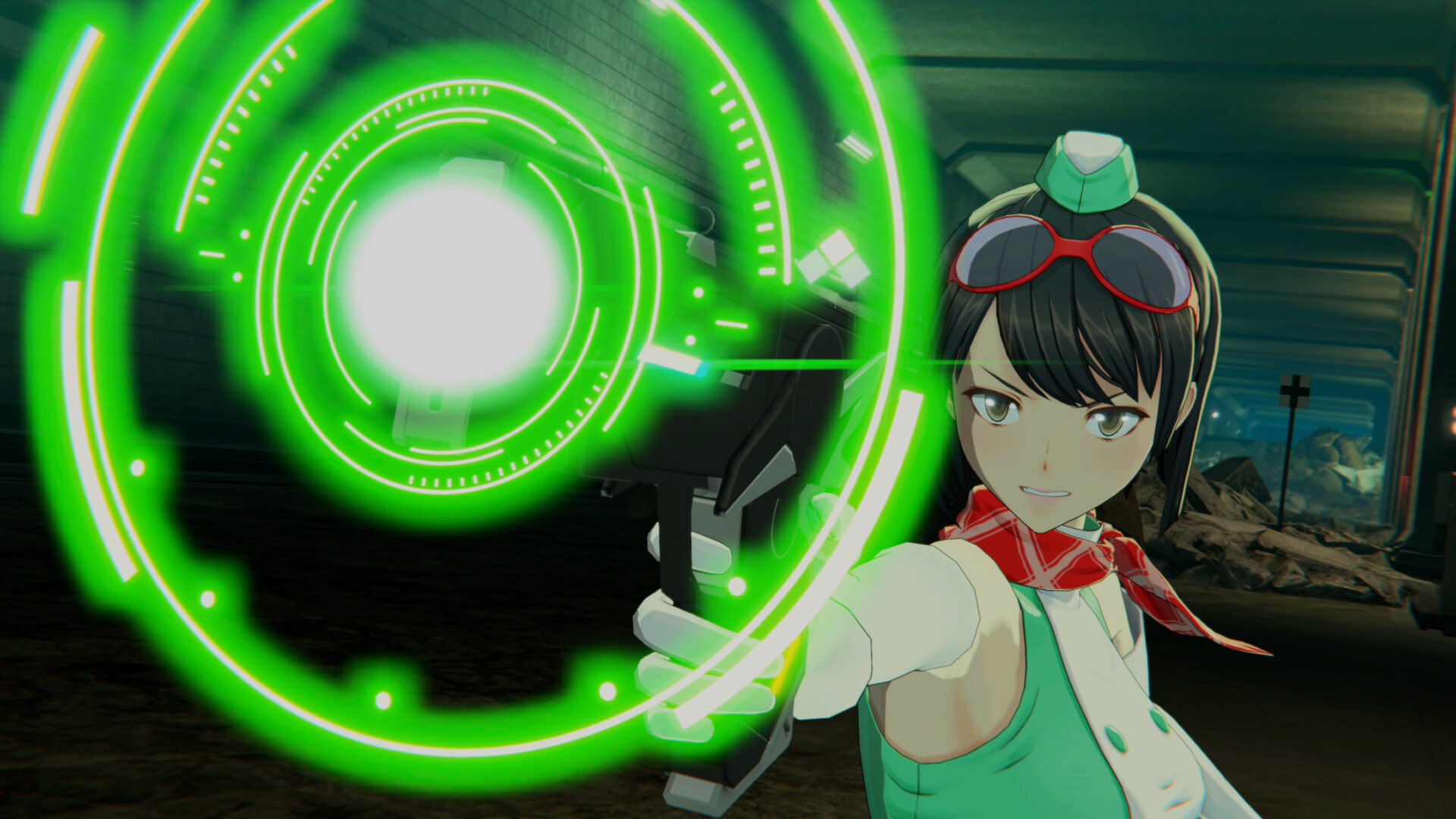
Time Stranger runs on Unreal Engine 5, and it is the first Digimon Story title built on a modern engine rather than inherited Vita-era tech. The jump is obvious the moment you walk into Tokyo. Environments have real lighting, Digimon models carry far more detail and the Cross Art cutscenes use dynamic cameras that the older games could not manage.
The art direction stays stylised rather than chasing photorealism, which suits the brand. Character portraits in dialogue have an anime finish, and the Digimon themselves look like the Bandai illustrations brought to life rather than redesigned. On PS5 and Series X it targets smooth performance, and on PC the Steam version scales from modest hardware to high-end rigs. I played most of my first run on PS5 and had no complaints about frame pacing.
The Nintendo Switch and Switch 2 versions are the ones to watch for anyone who wants it portable. Bandai Namco announced them in February 2026, after the October launch, and because the game was built on UE5 rather than a legacy engine, a handheld port was always more plausible than it would have been for Cyber Sleuth’s original tech.
English dub and voice options
Yes, Digimon Story Time Stranger has a full English dub, alongside the original Japanese audio. This is a first for the Digimon Story sub-series; both Cyber Sleuth games shipped with Japanese voices and English subtitles only. You can switch the audio language in the options menu and the subtitles are independent, so Japanese audio with English text is still available for purists.
The English cast handles the story well, and ADAMAS agency scenes in particular benefit from being voiced. I played the first act in English, switched to Japanese for comparison, and ended up staying in English, which I never expected to say about a Digimon game. The IMDb page for the game lists it as a 2025 video game and carries the voice cast credits if you want to look up who voices whom.
Editions, price and release details
Time Stranger launched worldwide on 3 October 2025. The initial reveal came at the Xbox Developer Direct in January 2025, with the date locked in over the summer.
| Edition | Format | What you get |
|---|---|---|
| Standard Edition | Physical and digital | Base game |
| Deluxe Edition | Digital | Base game plus bundled bonus content |
| Nintendo Switch and Switch 2 versions | Physical and digital | Base game, announced after launch and released 10 July 2026 |
The standard edition launched at full retail price on consoles and Steam, with the Deluxe tier priced higher for its extras. If budget is the concern, my honest advice is that the standard edition is the complete game. The story, the full roster and the post-launch free updates are all there. The Deluxe bonuses are nice-to-haves for collectors rather than content you will miss.
On the question of development budget, which comes up surprisingly often in search: Bandai Namco has not disclosed what Time Stranger cost to make, and I would not trust any site claiming a figure. What is clear from the final product is that it received more investment than any previous Digimon Story entry.
Free updates and downloadable content
Bandai Namco has supported Time Stranger with free update patches since launch. These have combined bug fixes, balance adjustments and quality-of-life tweaks with additional Digimon added to the roster, which is why the “over 450” figure is a floor rather than a ceiling. The official site publishes patch notes for each update, and I check them because new Digimon can also mean new evolution routes for things you already own.
Paid downloadable content beyond the launch editions is handled separately on each storefront. The right way to see exactly what is available for your platform is the in-game store or the platform’s product page, since the DLC listing differs by region and by whether you own the Deluxe tier.
Sales and reception
Time Stranger is the fastest-selling Digimon Story game to date. Bandai Namco announced it had passed 500,000 copies sold shortly after launch, a mark that the original Cyber Sleuth took considerably longer to reach. For a series that spent years as a niche Vita franchise, that is a serious result and it explains why the Switch and Switch 2 ports got the green light.
Critical reception was generally favourable. Reviewers praised the roster, the evolution system and the visual leap, with the usual Digimon Story caveats about grind and a slow opening hour or two. From a fan’s perspective, the consensus is that this is the best Digimon RPG since Cyber Sleuth and arguably the best overall.
Age rating
Digimon Story Time Stranger is rated Teen by the ESRB in North America and PEGI 12 in Europe. The ADAMAS plot is darker than the anime audience might expect, with a catastrophe at its centre and some genuinely heavy story beats around Inori and Aegiomon. It is comfortably fine for the teenage fans who grew up on Adventure and Tamers, and for adults who never stopped, but it is not a little-kids game in tone.
Community: Discord, IMDb and where fans gather
The Time Stranger community is active, which matters for a game with this much hidden evolution data. Bandai Namco’s official Digimon channels host a Discord presence, and fan-run servers for the Digimon Story games grew quickly after launch; they are the fastest place to get a specific evolution requirement confirmed or to find trade partners. Search for the official Bandai Namco Digimon server first, then branch into fan communities.
IMDb catalogues the game as a 2025 video game entry with cast and crew credits, useful mainly for tracking the English voice actors. Steam community hubs and the usual Digimon subreddits round out the places I check for update news.
Time Stranger vs Cyber Sleuth
For anyone deciding whether to jump in from the older games, here is how the two line up.
| Feature | Cyber Sleuth Complete Edition | Time Stranger |
|---|---|---|
| Digimon count | 341 | Over 450 |
| Engine | Legacy Vita-era tech | Unreal Engine 5 |
| English voice acting | No | Yes |
| Protagonist role | Hacker / detective | ADAMAS agent |
| Digital World | EDEN / Digital World | Iliad |
| Signature new mechanics | Hacking skills | Agent Skills, Cross Arts |
| Launch platforms | Switch, PC (Complete) | PS5, Xbox Series X|S, PC |
You do not need to play Cyber Sleuth first. Time Stranger is a standalone story with new characters and a new Digital World. That said, Cyber Sleuth veterans will recognise the scan-and-convert loop and the de-evolution trick immediately, and they will have an easier time with the early game.
Why Time Stranger matters for the series
Digimon has spent decades in Pokémon’s shadow in the West, and the Digimon Story games were the closest it came to breaking through. Time Stranger is the first entry that feels like it had the backing to compete: a modern engine, a dub, a 450-plus roster and a story confident enough to put the Olympos XII at its centre. Half a million sales shortly after launch tells Bandai Namco the audience is there. For fans like me who have wanted a flagship Digimon RPG for years, this is the one.
FAQ
When did Digimon Story Time Stranger come out?
It launched on 3 October 2025 for PlayStation 5, Xbox Series X|S and PC via Steam. Nintendo Switch and Nintendo Switch 2 versions were announced in February 2026, after the initial release, and arrived on 10 July 2026.
Does Digimon Story Time Stranger have an English dub?
Yes. The game ships with both English and Japanese voice acting, and you can switch audio and subtitle languages separately in the options. It is the first Digimon Story game with an English dub.
How many Digimon are in Time Stranger?
More than 450 at launch, with free updates adding more afterwards. That is the largest roster of any Digimon Story game, up from 341 in Cyber Sleuth Complete Edition.
What engine does Time Stranger use?
Digimon Story Time Stranger runs on Unreal Engine 5, which is why it looks so far ahead of the Cyber Sleuth games.
What is the age rating?
Teen from the ESRB and PEGI 12 in Europe. The story is darker than the anime, with a catastrophe plot and mature themes, but nothing beyond a teen rating.
How many copies has Time Stranger sold?
Bandai Namco announced the game passed 500,000 copies sold shortly after launch, making it the fastest-selling Digimon Story title.
Do I need to play Cyber Sleuth before Time Stranger?
No. Time Stranger is a standalone story with its own protagonist, characters and Digital World called Iliad. Cyber Sleuth experience helps with the mechanics but is not required.
Is the Deluxe Edition worth it?
Only if you want the bonus extras. The standard edition contains the full game, the complete roster and all free post-launch updates, so budget-conscious players lose nothing meaningful by picking it.