What is digivolution and how do Digimon evolve
Digivolution is how a Digimon transforms into a stronger form, moving up a ladder of six main stages from Fresh to Mega. The rules change depending on where you look: the anime ties it to a Tamer’s emotions and Digivice, the games tie it to stats, levels and care, and the card game turns it into a cost you pay from memory. This guide walks through every stage, every type of Digivolution and how each medium handles it.
The short answer
A Digimon is living data. When that data gains enough energy, its code rewrites itself into a bigger, more powerful body. That rewrite is Digivolution (Japanese: shinka, usually translated as “evolution”).
You will see the same idea written a dozen ways in the fandom: digivolve, digivolved, digivolving, “digimon evo”, evolution lines. They all mean the same mechanic. The English dub coined “Digivolution” for Digimon Adventure in 1999, and Bandai has used it in every English game and card set since.
Three things stay true across all media:
- A Digimon moves one stage at a time unless a special method lets it skip.
- Most Digimon have several possible next forms, so lines branch.
- Digivolution can be undone. Partners de-digivolve after battle in the anime, and most games let you reset a Digimon on purpose.
Everything else depends on the medium, so this article names the source for each evolution it mentions.
The six Digivolution stages
The level system below comes from the Digimon Adventure dub and the English games. The Japanese names sit next to them because the mismatch causes more arguments than any other topic in this fandom.
| English stage | Japanese stage | Example (Adventure line) | Typical role |
|---|---|---|---|
| Fresh | Baby I (Youjiki I) | Botamon | Newly hatched, cannot fight |
| In-Training | Baby II (Youjiki II) | Koromon | Weak, bubbles and headbutts |
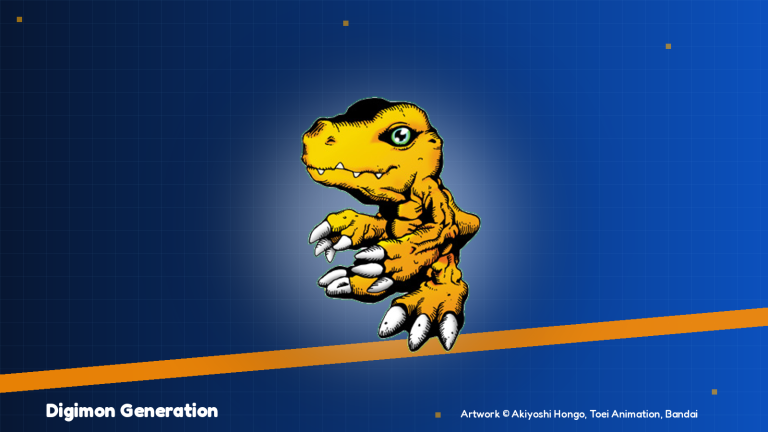
| Rookie | Child (Seichouki) | Agumon | Standard partner form |
| Champion | Adult (Seijukuki) | Greymon | First real fighting form |
| Ultimate | Perfect (Kanzentai) | MetalGreymon | Mid-series power spike |
| Mega | Ultimate (Kyuukyokutai) | WarGreymon | Final form in most lines |
Read that table twice. The Japanese “Ultimate” is the English “Mega”, and the English “Ultimate” is the Japanese “Perfect”. When a Japanese card or wiki page calls Omnimon (Omegamon) an Ultimate, it means Mega.
A few media add a seventh rung. Digimon Story Cyber Sleuth (PS4, Vita and later Switch/PC Complete Edition) lists an “Ultra” level above Mega for Digimon such as Imperialdramon Paladin Mode. Fans sometimes call this “Super Ultimate”. The anime never names the level; it just shows Paladin Mode outclassing two Megas at once.
Greymon is the Digimon most people picture when they hear “digivolve”. It was already a Champion option on the original 1997 pet, and it arrived early in the anime in Digimon Adventure episode 2 when Agumon first changed form against Shellmon.
Why Digimon evolve: the in-universe logic
The anime explains Digivolution through energy and bonds. In Digimon Adventure, the Digivice channels a child’s feelings into the partner. Courage from Tai lets Agumon reach Greymon. Later, the Crests unlock Ultimate: MetalGreymon first appears in episode 21 after Tai’s Crest of Courage glows.
Forcing it backfires. In episode 16, Tai pushes Greymon to digivolve out of fear and arrogance, and Greymon becomes SkullGreymon instead, a rampaging Ultimate with no loyalty. That scene established the rule that emotion decides the shape of the evolution, not just its timing.
Digimon Tamers (2001) gives a more physical take. Takato, Henry and Rika slash cards through a D-Power (D-Arc) to inject data into Guilmon, Terriermon and Renamon. The Blue Card specifically bridges Champion to Ultimate. Later the Tamers themselves merge into their partners, which is why a Tamers Mega feels different from an Adventure Mega.
Games skip the drama. A Digimon evolves because it met numeric requirements. That is less romantic but far easier to plan around, and it is why game evolution lines are usually wider than anime ones.
Every type of Digivolution, by medium
Writers have invented new ways to digivolve in almost every series. Here are the ones you will meet, with where each one comes from.
Standard Digivolution
One stage up, one step at a time. Agumon becomes Greymon, Greymon becomes MetalGreymon. This is the default in Digimon Adventure, in Ghost Game and in every Story game. The dub shouts it as “Agumon digivolve to… Greymon!”
Warp Digivolution
Skipping stages. In Digimon Adventure episode 39, Agumon and Gabumon go straight from Rookie to Mega when the Crests of Courage and Friendship react to VenomMyotismon, giving us WarGreymon and MetalGarurumon in a single scene. Impmon does the same in Digimon Tamers, jumping from Rookie to Beelzemon (Beelzebumon) after accepting power from the Sovereign Zhuqiaomon.
Games rarely let you warp. Cyber Sleuth makes you clear each stage in order even if your Digimon is overleveled.
Armor Digivolution
The signature mechanic of Digimon Adventure 02 (2000). Instead of pushing up the normal ladder, a Rookie uses a Digi-Egg (Digimental) tied to one of the original Crests. The result is an Armor Digimon, a side form roughly equal to a Champion in power. Full table in the Digi-Egg section below.
DNA Digivolution (Jogress)
Two Digimon fuse into one. Adventure 02 introduces it with ExVeemon and Stingmon combining into Paildramon, who later digivolves into Imperialdramon Dragon Mode. The Japanese term is Jogress Evolution, and the Story games keep that logic under the “DNA Digivolve” menu.
Biomerge (Matrix Evolution)
Digimon Tamers only, in the anime. The human merges with the partner to form a Mega. Takato and Guilmon become Gallantmon (Dukemon), Henry and Terriermon become MegaGargomon, Rika and Renamon become Sakuyamon. No other series lets humans fuse into partners this way.
Spirit Evolution
Digimon Frontier (2002) throws out partners entirely. The kids become Digimon by using ancient Spirits. Takuya becomes Agunimon with a Human Spirit and BurningGreymon with a Beast Spirit. Koji becomes Lobomon (Wolfmon) and KendoGarurumon. J.P. becomes Beetlemon (Blitzmon). Fusing both Spirits gives forms like Aldamon and BeoWolfmon, and combining all twenty Spirits produces Susanoomon.
Dark Digivolution
An evolution corrupted by negative emotion or outside tampering. SkullGreymon in Adventure is the famous one. Tamers repeats it with Megidramon, the form WarGrowlmon takes when Takato’s rage overflows during the fight with Beelzemon. Dark forms are rarely controllable, and the plot usually treats them as a mistake to undo.
Mode Change, Burst Mode and other side-steps
Some Digimon change shape without changing level. Imperialdramon shifts from Dragon Mode to Fighter Mode in Adventure 02. Beelzemon gains Blast Mode in Tamers. Digimon Data Squad (Savers, 2006) adds Burst Mode, with ShineGreymon Burst Mode as the showcase. These are still Megas; the mode just rewrites the loadout.
DigiXros
Digimon Fusion (Xros Wars, 2010) replaces levels with combination. Shoutmon fuses with Ballistamon, Dorulumon and Starmon to make Shoutmon X4. Because Fusion ignores the stage system, its Digimon do not slot cleanly into the tables in this article.
Digi-Egg Digivolving forms
Armor Digivolution deserves its own chart because fans still mix up which Digi-Egg produces which form. Everything here is from the Digimon Adventure 02 anime.
| Digimon | Digi-Egg of Courage | Digi-Egg of Friendship | Digi-Egg of Love | Digi-Egg of Sincerity | Digi-Egg of Knowledge | Digi-Egg of Reliability | Digi-Egg of Hope | Digi-Egg of Light | Digi-Egg of Miracles |
|---|---|---|---|---|---|---|---|---|---|
| Veemon | Flamedramon | Raidramon | Magnamon | ||||||
| Hawkmon | Halsemon | Shurimon | |||||||
| Armadillomon | Digmon | Submarimon | |||||||
| Patamon | Pegasusmon | ||||||||
| Gatomon (Tailmon) | Nefertimon |
A few details that trip people up:
- Gatomon is already a Champion in Adventure, but she loses her Holy Ring at the start of 02 and is too weak to reach Angewomon. Armor Digivolution to Nefertimon is her workaround.
- Wormmon never Armor Digivolves in the anime. His side forms exist only in toys and games. His anime line is Wormmon to Stingmon to Paildramon via DNA.
- Magnamon is the odd one out. The Digi-Egg of Miracles produces a form that fights at Mega-level power even though Armor Digimon normally sit around Champion.
- Hawkmon’s natural Champion is Aquilamon, who arrives later in the series. Early on, Halsemon and Shurimon are the only forms Yolei can call on.
Later Digi-Egg combinations, like Veemon with the Digi-Egg of Knowledge, show up in the virtual pets and in Digimon World DS era games rather than on screen.
DNA Digivolution pairings worth knowing
| Partner A | Partner B | Result | Source |
|---|---|---|---|
| WarGreymon | MetalGarurumon | Omnimon (Omegamon) | Digimon Adventure: Our War Game! (2000) |
| ExVeemon | Stingmon | Paildramon | Digimon Adventure 02 |
| Aquilamon | Gatomon | Silphymon | Digimon Adventure 02 |
| Ankylomon | Angemon | Shakkoumon | Digimon Adventure 02 |
| Imperialdramon Fighter Mode | Omnimon | Imperialdramon Paladin Mode | Digimon Adventure 02: Revenge of Diaboromon (2001) |
| Alphamon | Ouryumon | Alphamon Ouryuken | Digimon Story Cyber Sleuth |
Omnimon is the one that defined the concept. Our War Game! aired before Adventure 02 ever used the word Jogress, and WarGreymon plus MetalGarurumon merging in a computer network against Diaboromon is still the most replayed Digivolution in the franchise.
Imperialdramon Paladin Mode is the ceiling of the Adventure era. Omnimon pours its power into Imperialdramon Fighter Mode, the result picks up the Omega Blade and ends Armageddemon in one swing. The games file it one level above Mega, which is where the “Ultra” idea in Cyber Sleuth comes from.
Ryudamon matters here too. This Japanese-origin Rookie follows the line Ryudamon, Ginryumon, Hisyaryumon, Ouryumon, and Ouryumon is the DNA partner for Alphamon in Cyber Sleuth. If you want Alphamon Ouryuken, you need to raise a Ryudamon from the ground up.
Example evolution lines from the anime
These are the canon anime lines for well-known partners. Games expand all of them, so treat this as the on-screen version only.
| Rookie | Champion | Ultimate | Mega | Series |
|---|---|---|---|---|
| Agumon | Greymon | MetalGreymon | WarGreymon | Digimon Adventure (1999) |
| Gabumon | Garurumon | WereGarurumon | MetalGarurumon | Digimon Adventure |
| Tentomon | Kabuterimon | MegaKabuterimon | HerculesKabuterimon | Adventure to Adventure tri. (Mega only in tri.) |
| Patamon | Angemon | MagnaAngemon | Seraphimon | Adventure to Adventure tri. (Mega only in tri.) |
| Gatomon (Tailmon) | (Champion itself) | Angewomon | Ophanimon | Adventure to Adventure tri. (Mega only in tri.) |
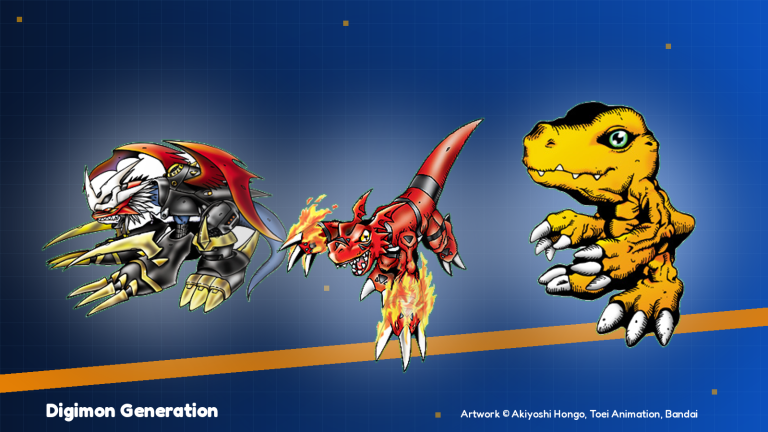
| Guilmon | Growlmon | WarGrowlmon | Gallantmon (Dukemon) | Digimon Tamers (2001) |
| Terriermon | Gargomon | Rapidmon | MegaGargomon | Digimon Tamers |
| Renamon | Kyubimon | Taomon | Sakuyamon | Digimon Tamers |
| Impmon | (skipped) | (skipped) | Beelzemon | Digimon Tamers (Warp) |
| Monodramon | Cyberdramon | Digimon Tamers | ||
| Gammamon | BetelGammamon / KausGammamon / WezenGammamon | Canoweissmon | Siriusmon | Digimon Ghost Game (2021) |
| Angoramon | SymbareAngoramon | Lamortmon | Diarbbitmon | Digimon Ghost Game |
| Jellymon | TeslaJellymon | Thetismon | Amphimon | Digimon Ghost Game |
Three observations from that table.
Gatomon starts the Adventure series already at Champion. Her Rookie, Salamon (Plotmon), appears only in flashback. This is why “Gatomon evolution” questions confuse newcomers: the line looks shifted compared to Agumon’s.
Gammamon is the first main partner to have multiple Champion forms in the anime at once. Hiro’s Gammamon switches between BetelGammamon, KausGammamon and WezenGammamon depending on the situation, with GulusGammamon as the dark fourth option. Ghost Game treats Digivolution as a toolkit rather than a straight line, which mirrors how the games have worked for years.
Monodramon is a reverse case. Ryo’s partner spends almost all of Tamers as Cyberdramon, and only de-digivolves to Monodramon in the finale. Fans who know Cyberdramon from the games sometimes forget the Rookie exists.
Gallantmon (Dukemon) is the Royal Knight that proved a Virus Digimon can be a hero. It only appears when Takato and Guilmon Biomerge, and the finale pushes it one step further into Gallantmon Crimson Mode. The Tamers line is a good reminder that the attribute (Vaccine, Data, Virus, Free) has nothing to do with morality.
How Digivolution works in the games
Each game series has its own ruleset. Always check the game, the version and any DLC before you follow a requirements list, because thresholds get patched and re-balanced.
Virtual pets (1997 onward)
The original Digimon pet set the template. You hatch a Botamon, it becomes Koromon, then Agumon or Betamon. From there, your care record decides the Champion. Few care mistakes and steady training push toward Greymon or Tyrannomon. Sloppy care lands you on Numemon. The pet never explains its formula, which is why strategy guides for the toy circulated years before the anime existed.
Digimon World (PS1, 1999) and Next Order
Digimon World runs on a clock. Your partner lives a set number of days, evolves on a timer, and the form it takes depends on stats, weight, care mistakes and battles. There is no level. Instead you train HP, MP, Offense, Defense, Speed and Brains at the gym and hope the numbers line up with a specific Champion’s requirements when the evolution timer fires. Bakemon is one of the Champions you can raise here, a Virus-attribute Ghost type that the Adventure anime only ever used as an enemy mob.
Digimon World: Next Order (PS4 2017, Switch and PC 2023) uses the same philosophy with two partners at once. Every evolution has stat thresholds, a weight window, a care-mistake limit and sometimes a bonus condition. Hit the thresholds early and the game lets you evolve before the timer, which is the biggest quality-of-life change from the original.
Tamer tip
In Digimon World and Next Order, the training gym shows which stat is lagging. Train the lowest stat first, because missing one requirement by a single point locks you out of the form you planned.
Digimon Story Cyber Sleuth and Hacker’s Memory
Cyber Sleuth (and the Complete Edition on Switch/PC, 2019) is the system most modern fans learned on. Every Digivolution has a checklist: a minimum level, minimum values in some of ATK, DEF, INT, SPD, HP and SP, and often a minimum ABI (Ability) or CAM (Camaraderie). The game shows you the exact numbers on the Digivolve screen, so you never have to guess.
ABI is the stat that confuses people. It rises each time you Digivolve or De-Digivolve, and a higher ABI raises the Digimon’s level cap. Mega forms with steep ABI requirements are reached by cycling a Digimon down to Rookie and back up several times. That loop is intentional, and it is the core of raising a strong team.
How to get Omnimon in Digimon Story Cyber Sleuth
- Raise a WarGreymon and a MetalGarurumon to Mega.
- Cycle both through De-Digivolve and Digivolve until their ABI meets the check shown on the DNA Digivolve screen.
- Train the stats the screen lists in red by levelling, or by farming with the Digi-Farm.
- Open the Digivolve menu, select DNA Digivolution, and pick the two partners.
- Confirm. The result is Omnimon with inherited skills from both parents.
The same loop applies to Imperialdramon Paladin Mode (DNA from Imperialdramon Fighter Mode and Omnimon) and Alphamon Ouryuken. If you want Paladin Mode, you are effectively building four Megas.
Digimon Story: Time Stranger
Digimon Story Time Stranger (PS5, Xbox Series X|S and PC, October 2025) keeps the Story formula of level, stat and special-condition checks, plus de-digivolving to rebuild. The evolution trees are wider than Cyber Sleuth’s and you can read requirements directly in the Digivolution screen before committing. Bakemon, Tentomon, Hawkmon and plenty of other Adventure-era Digimon are available early, so classic lines are easy to assemble.
Digimon Survive (2022)
Survive is a visual novel with tactics battles, and its Digivolution follows the story. Takuma’s Agumon branches by karma: your dialogue choices push toward Moral, Harmony or Wrathful, and that alignment picks which Ultimate and Mega Agumon reaches. Other partners evolve when you spend Enlightenment Slabs, item drops that function like keys for each stage. There is no stat training at all.
Digimon Vital Bracelet
The Vital Bracelet (2021) wearable brings back pet-style raising. Your real-world step count and heart rate feed “vitals” into the Digimon, and each evolution on a Dim card needs a vitals target, a trophy count from battles and sometimes a specific mission. The Agumon Dim follows Agumon, Greymon, MetalGreymon, WarGreymon with care conditions deciding whether you branch. It is the closest modern hardware to the 1997 experience.
Digivolution in the Digimon Card Game
The Digimon Card Game launched in Japan in 2020 and in English in 2021, and it turns Digivolution into the core resource decision. If you have read our piece on “digimon tcg“, you already know memory is the only currency. Here is how evolution fits.
| Card level | Equivalent stage | Starter example (ST-1 Gaia Red) |
|---|---|---|
| Lv.2 | Digi-Egg (In-Training) | Koromon |
| Lv.3 | Rookie | Agumon |
| Lv.4 | Champion | Greymon |
| Lv.5 | Ultimate | MetalGreymon |
| Lv.6 | Mega | WarGreymon |
| Lv.7 | Beyond Mega | A handful of top-end cards only |
Rules that matter at the table:
- You digivolve by placing a card on top of a Digimon exactly one level lower, paying the digivolution cost printed in the card’s bottom corner. The cost is usually far lower than hard-playing the higher card.
- You draw one card every time you digivolve. That is the main card-advantage engine in the game.
- Cards underneath contribute inherited effects. A Greymon with Agumon under it keeps Agumon’s inherited text.
- DNA Digivolve exists as a keyword on specific cards. It lets you stack a card on top of two Digimon at once, combining both stacks.
- The level numbers match the anime stage order, so an Adventure fan can build ST-1 Gaia Red from memory: Koromon, Agumon, Greymon, MetalGreymon, WarGreymon.
Tamer tip
In the card game, a Digimon that digivolved this turn keeps the “can attack” status of the Digimon under it. Digivolve onto a Digimon that has been on the field since last turn and you can attack immediately with the bigger body.
How to read a Digimon evolution chart
Evolution chart images float around every wiki and forum, and most of them look like a spider web. Here is how to decode one without getting lost.
Start at the center or left, where the Fresh and In-Training forms sit. Each arrow means “can become”. A Rookie with five arrows leaving it has five possible Champions in that specific source. If the chart does not say which game or series it is based on, treat it with suspicion. A Terriermon chart for Cyber Sleuth and a Terriermon chart for Tamers look nothing alike.
Then check for these markers:
- Two arrows entering one node means DNA Digivolution. The node needs both parents.
- A box drawn outside the main ladder is an Armor form or a Mode.
- A dotted or red arrow often means Dark Digivolution.
- Charts that list numbers next to arrows are game charts. The numbers are requirements, usually level followed by stats.
The most reliable charts are the ones built from the official Digimon Reference Book, the Bandai database that lists canonical forms for every Digimon. Game wikis are second. Fan-made “complete” charts that merge all media into one image are useful for inspiration and terrible for planning a run.
Four misconceptions about Digivolution
“Every Rookie has one Champion.” Not even in the anime. Gammamon has three regular Champions in Ghost Game. In games, Agumon routinely has four or more.
“Mega is always the end.” Paladin Mode, Susanoomon and the Ultra level in Cyber Sleuth all sit above Mega. The anime also stacks Modes on top of Megas, so Beelzemon Blast Mode is stronger than Beelzemon without being a new level.
“Attribute decides the line.” Attribute is a rock-paper-scissors triangle (Vaccine beats Virus, Virus beats Data, Data beats Vaccine) that affects battle damage in games. It does not lock lines. Gallantmon is Virus and comes from the Vaccine… no, Guilmon is Virus too, but Impmon (Virus) becomes Beelzemon (Virus) while Agumon (Vaccine) can reach SkullGreymon (Virus) in Adventure. Lines cross attributes constantly.
“Dub names changed the levels.” The dub renamed Digimon (Tailmon to Gatomon, Wolfmon to Lobomon, Blitzmon to Beetlemon, Omegamon to Omnimon) and renamed the stages, but it did not reorder them. If you are watching the Japanese version on a service covered in our “digimon hulu” roundup, just mentally swap Perfect for Ultimate and Ultimate for Mega.
Evolution lines that show how wide the branches get
To see how far a single Rookie can spread, compare Agumon across three sources.
| Source | Agumon’s Champion options |
|---|---|
| Digimon Adventure (anime) | Greymon only (SkullGreymon via dark Ultimate from Greymon) |
| Digimon virtual pet (1997) | Greymon, Tyrannomon, Meramon, Devimon, Airdramon, Seadramon, Numemon |
| Digimon Story Cyber Sleuth | Multiple, including Greymon, GeoGreymon and Tyrannomon, shown on the Digivolve screen |
The pet from 1997 had the widest list because it only had a dozen or so Champions in total and every Rookie needed access to most of them. The anime narrowed it to one for storytelling. Games reopened it so that no two players build the same team.
Renamon tells the same story. On screen she only ever becomes Kyubimon, Taomon and Sakuyamon. In the Story games, Renamon can head toward Kyubimon or toward entirely different Champions, and Kyubimon can detour away from Taomon. If you raised Renamon in Cyber Sleuth expecting the Tamers line, you probably hit a surprise at Ultimate.
Tentomon is a quieter example. Kabuterimon and MegaKabuterimon are locked in Adventure. His Mega, HerculesKabuterimon, never appeared in the original two series and first showed up on screen in Digimon Adventure tri. (2015 to 2018), returning later in the 2020 reboot Digimon Adventure:. For fifteen years, “what is Tentomon’s Mega” had different answers depending on whether you asked an anime fan or a game player.
FAQ
What is the difference between Digivolution and evolution?
Nothing in mechanics. “Digivolution” is the English dub and English game term, “evolution” (shinka) is the Japanese term, and fans use both. Cards, games and wikis in English say digivolve; subtitled anime says evolve.
How many Digivolution stages are there?
Six main stages in the English system: Fresh, In-Training, Rookie, Champion, Ultimate and Mega. Some games add Ultra above Mega, and Armor, Hybrid and Mode forms sit alongside the ladder rather than on it.
Can a Digimon skip stages?
Yes, through Warp Digivolution in the anime. Agumon jumps from Rookie to WarGreymon in Digimon Adventure episode 39, and Impmon jumps to Beelzemon in Tamers. Games almost never allow it; Cyber Sleuth, Next Order and Time Stranger all require every stage in order.
Why does the English dub call Mega “Ultimate” in Japan?
The dub team renamed the stages for Digimon Adventure. Japanese Perfect became English Ultimate, and Japanese Ultimate became English Mega. The order is identical, only the labels moved.
Is Armor Digivolution stronger than regular Champion?
Roughly equal for most Digi-Eggs. Flamedramon, Halsemon and Digmon fight at Champion level in Adventure 02. The Digi-Egg of Miracles is the exception: Magnamon performs at Mega level despite technically being an Armor form.
Which game has the easiest Digivolution system to learn?
Digimon Story Cyber Sleuth Complete Edition shows every requirement on screen and lets you de-digivolve freely, so it is the gentlest entry. Digimon World (1999) is the hardest because it hides the formulas and punishes care mistakes with permanent consequences.
Does the Digimon Card Game follow the anime levels?
Yes. Lv.3 is Rookie, Lv.4 is Champion, Lv.5 is Ultimate and Lv.6 is Mega, so a stack of Agumon, Greymon, MetalGreymon and WarGreymon in ST-1 Gaia Red mirrors the Adventure line exactly.