The D-3 Digivice from Digimon Adventure 02
The D-3 Digivice is the device Davis, Yolei, Cody and the rest of the new DigiDestined carry in Digimon Adventure 02. This guide explains what the D-3 does in the anime, who owns one and how its Armor and DNA powers work. It also shows you how to check a real D-3 toy before you pay for it.
What the D-3 is in Digimon Adventure 02
Digimon Adventure 02 aired in Japan on Fuji TV from April 2, 2000 to March 25, 2001, across 50 episodes. It picks up a few years after the original Digimon Adventure, and it needed a new device for a new team. That device is the D-3.
In the first episode, “Enter Flamedramon” in the English dub, three D-3s fly out of a computer at Odaiba Elementary. Davis, Yolei and Cody each end up with one. T.K. and Kari’s original Digivices change into D-3s early on, so the veterans can travel with the new kids.
The D-3 is chunkier than the 1999 Digivice. It has a larger screen, a strap loop and a clip-on shape that suits a team that keeps diving through computer screens. On the anime, it does three big jobs: it opens the Digital Gate, it powers Armor Digivolution and it makes DNA Digivolution possible.
If you want the wider picture of how a Digivice works across every series, the short version is this. Each generation of Digivice reflects the main digivolution gimmick of its season. The D-3 is built around Armor and DNA.
Who carries a D-3
The six core D-3 owners in Digimon Adventure 02 are the ones you will see in nearly every episode. Here they are with their English and Japanese names and their partners.
| DigiDestined (English) | Japanese name | Partner Digimon (Japanese name) |
|---|---|---|
| Davis Motomiya | Daisuke Motomiya | Veemon (V-mon) |
| Yolei Inoue | Miyako Inoue | Hawkmon |
| Cody Hida | Iori Hida | Armadillomon |
| T.K. Takaishi | Takeru Takaishi | Patamon |
| Kari Kamiya | Hikari Yagami | Gatomon (Tailmon) |
| Ken Ichijouji | Ken Ichijouji | Wormmon |
Ken’s D-3 is the odd one out. During the Digimon Emperor arc, his dark D-3 is a sign of how far he has drifted from the rest of the team. The device stays with him after he joins the DigiDestined. It ends up powering some of the most important DNA Digivolutions in the series.
Later in the season, the story goes global. DigiDestined in other countries also carry Digivices, which pays off in the final episodes when children around the world raise their devices together.
What a D-3 does in the anime
You can sort every D-3 scene into a handful of functions. Knowing them makes rewatching 02 much more fun, because you start to notice when the writers lean on each one.
Opening the Digital Gate
The new team does not need a special event to cross over. They point a D-3 at a computer screen with the gate open, and in the dub they shout “Digi-port open!” They get pulled into the Digital World and reappear in the outfits they wear there.
This turned the Digital World into a place the kids could visit after school. That shift is a big reason 02 feels so different from the original Digimon Adventure.
Armor Digivolution
The Digimon Emperor’s Control Spires block normal digivolution nearby. That is a story problem, and the D-3 is the answer. Davis and the others use Digi-Eggs, stored in their D-Terminals, to Armor Digivolve with the dub call “Digi-Armor Energize!”
Armor forms come from Digi-Eggs, not from the usual Rookie to Champion path. That is why they still work under the Control Spires’ influence.
DNA Digivolution
DNA Digivolution (Jogress in Japanese) fuses two Digimon into one. It needs two D-3s and two DigiDestined in sync. In the anime, Davis and Ken’s bond is what first unlocks it.
Detecting and tracking
The D-3 screen works as a radar. The kids use it to find each other, track Digimon and work out where they are in the Digital World. It is a small feature, but it carries a lot of plot in the early episodes.
Armor and DNA forms powered by the D-3
These are the main Armor and DNA Digivolutions in the Digimon Adventure 02 anime. Japanese names appear in brackets where they differ. Levels follow the anime. Armor forms sit outside the normal level chart, which is part of their appeal.
| Digimon | Digi-Egg or DNA partner | Result (Japanese name) |
|---|---|---|
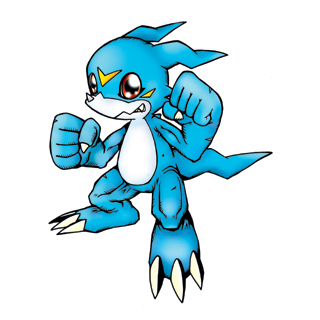
| Veemon | Digi-Egg of Courage | Flamedramon (Fladramon) |
| Veemon | Digi-Egg of Friendship | Raidramon (Lighdramon) |
| Veemon | Golden Digi-Egg of Miracles | Magnamon |
| Hawkmon | Digi-Egg of Love | Halsemon (Holsmon) |
| Hawkmon | Digi-Egg of Sincerity | Shurimon |
| Armadillomon | Digi-Egg of Knowledge | Digmon |
| Armadillomon | Digi-Egg of Reliability | Submarimon |
| Patamon | Digi-Egg of Hope | Pegasusmon |
| Gatomon | Digi-Egg of Light | Nefertimon |
| ExVeemon + Stingmon | DNA Digivolution | Paildramon |
| Ankylomon + Angemon | DNA Digivolution | Shakkoumon |
| Aquilamon + Gatomon | DNA Digivolution | Silphymon |
Paildramon goes one step further in the anime, digivolving into Imperialdramon Dragon Mode. Every row in this table depends on a D-3 at some point. You can see why fans call it the most hands-on Digivice of the early series.
D-3 vs the original Digivice, and the “D2” question
A lot of people search for “d2 digivice” or “digivice d2” when they are looking for this device. Here is the plain answer. The anime never had a D-2. The jump from the 1999 Digivice straight to the D-3 is part of what makes the name stick.
Fans usually land on “D2” for two reasons. They mix up “Digimon 02” with a device name, or they want the original Adventure Digivice and guess a number. If you want the Digimon 02 digivice, you want the D-3.
Here is how the D-3 fits among the main anime Digivices.
| Series | Japanese premiere | Main device |
|---|---|---|
| Digimon Adventure | 1999 | Digivice |
| Digimon Adventure 02 | 2000 | D-3 |
| Digimon Tamers | 2001 | D-Arc |
| Digimon Frontier | 2002 | D-Scanner |
| Digimon Data Squad (Savers) | 2006 | Digivice iC |
| Digimon Fusion (Xros Wars) | 2010 | Fusion Loader (Xros Loader) |
Notice the pattern. Each device is shaped by its season’s main gimmick. The D-Arc in Digimon Tamers swipes cards, the D-Scanner in Frontier handles Spirit Evolution and the D-3 handles Armor and DNA.
The D-3 toy: the original and the 25th Color Evolution
Bandai sold the D-3 as a real toy alongside the anime in the early 2000s. Like the 1999 Digivice, it is a step-driven device. You carry it, your movement moves you through areas, and you battle along the way. You can also link two units for head-to-head play.
Those originals are what you see in listings like “Bandai Digimon D3 Digivice Green Tested Works” or “Solid Red Color”. They come in several shell colors, and condition varies wildly after more than 20 years.
Bandai later revived the device as the D-3 -25th COLOR EVOLUTION-. This version keeps the classic look but swaps the old monochrome screen for a color one. It is part of the same anniversary push that brought back other classic devices, and it sits in a similar slot to the Digimon Pendulum Color line.
The 25th Color Evolution D-3 was sold in more than one color, which is why “unboxing all 3 colors” videos exist. It also has a map and area system, and players share map guides to plan their walks. If you are new to the toy, the reissue is the easier way in. It is newer, the screen is clearer, and you are not gambling on a 20-year-old battery compartment.
The D-3 sits in a bigger family of Digimon toy releases. Bandai’s wearables are a separate branch, so if you prefer something on your wrist, Digimon watches and pedometers cover that. Collectors who want display pieces rather than handhelds tend to look at a Digimon figure line instead.
What you need before you buy a used D-3
The ranking listings for “d3 digivice” are mostly secondhand units. Before you buy one, or before you power up one you found in a drawer, gather these:
- Fresh batteries in the size printed inside the unit’s battery cover. Check the label rather than guessing, because vintage and reissue models are not guaranteed to match.
- A small precision screwdriver for the battery door screw.
- Cotton swabs and isopropyl alcohol for cleaning contacts.
- Clear photos from the seller of the screen powered on, the battery compartment and the back of the shell.
- A second D-3 (optional) if you want to test the link feature.
- Patience, because a step-driven toy only proves itself after you have walked with it.
If a seller will not show the battery compartment, treat that as a red flag. Corrosion is the most common killer of vintage Digivices.
How to test a used D-3 Digivice
- Open the battery door and check for green or white corrosion.
- Clean the contacts gently with a swab and a little alcohol.
- Insert fresh batteries in the direction marked inside.
- Watch for the startup screen and check every pixel area.
- Press each button and confirm it clicks and responds.
- Shake or walk with the unit and confirm the step count rises.
- Play until you reach a battle to test the full game loop.
- Link with a second D-3 if you have one.
Common problems and how to fix them
Most D-3 problems come from age, not from bad luck. Here is what you are likely to run into and what to do.
The screen stays blank. Start with the batteries. Old cells and dirty contacts cause most “dead” units. Clean the contacts and try fresh batteries before you assume the board is gone.
The screen shows faded or missing segments. Vintage LCDs can fade, leak or lose rows of pixels. Gentle cleaning will not fix a damaged screen. Ask sellers for a powered-on photo so you can spot this before you buy.
Steps are not counting. The step sensor needs a clear jolt. Try a firmer shake, then a proper walk. If nothing registers after a few minutes, the sensor may be faulty.
Buttons feel mushy or do nothing. Dirt under the rubber pads is common in old toys. Pressing firmly a few times can help, but a fully dead button usually means internal wear.
Link battles fail. Clean the metal connection points on both units. Line them up straight and hold them steady. Make sure both devices are on the right screen before you connect.
Common mistakes to avoid:
- Leaving old batteries inside for months. That is how corrosion starts.
- Buying a “tested” unit without a photo of the screen switched on.
- Assuming a reissue and an original will link. Check the manual for your exact model first.
- Using too much liquid when cleaning. A barely damp swab is enough.
Tamer tip
Take the batteries out of any D-3 you plan to shelve for a while. Collectors who do this find their units still boot years later, while ones left loaded often show up with crusty contacts.
What a working D-3 should look like
Once you have cleaned it, powered it and walked with it, a healthy D-3 should:
- Boot to a clear screen with no missing segments.
- Respond to every button press straight away.
- Count steps when you walk with it.
- Take you into a battle as you progress.
- Link with a compatible unit when connected cleanly.
If your unit does all five, you have a successful D-3, and it is ready for play or display. If it fails one test, figure out which part is the problem before you pay extra for “mint” listings.
Why the D-3 still matters to fans
For a lot of fans, the D-3 is the Digivice they wanted most as kids. The original Digimon Adventure had the Butter-Fly song and the first Digivice. Digimon Adventure 02 had Koji Wada’s “Target ~Akai Shogeki~” playing while Flamedramon burst into action, D-3 in hand.
Its design also shows up in later Digimon media. The 02 kids carry their D-3s in the Digimon Adventure tri. films, and the device stays tied to the team’s identity across their appearances. That staying power is a big part of why the 25th Color Evolution version exists at all.
FAQ
What does a D-3 Digivice do in Digimon Adventure 02?
In the anime, the D-3 opens the Digital Gate through computer screens, powers Armor Digivolution with Digi-Eggs and allows DNA Digivolution between two partnered Digimon. It also works as a radar for finding other DigiDestined and Digimon.
Who has a D-3 in the anime?
The six core owners are Davis, Yolei, Cody, T.K., Kari and Ken. T.K. and Kari’s original Digivices change into D-3s early in the series. Ken’s dark D-3 stands out during the Digimon Emperor arc.
Is there a D-2 Digivice?
The anime never had a D-2. Searches for “d2 digivice” usually come from fans looking for the Digimon 02 digivice, which is the D-3, or for the original 1999 Digivice from Digimon Adventure.
Is the D-3 25th Color Evolution worth it over an original?
For most buyers, yes. The 25th Color Evolution keeps the classic look but adds a color screen, and you skip the battery corrosion and faded LCDs that plague 20-year-old units. Originals are better if you want period-accurate collecting.
Why won’t my old D-3 turn on?
Check the batteries and contacts first. Clean any corrosion, insert fresh batteries in the correct direction and try again. If the screen still stays blank, the problem is likely internal.