
Millenniummon
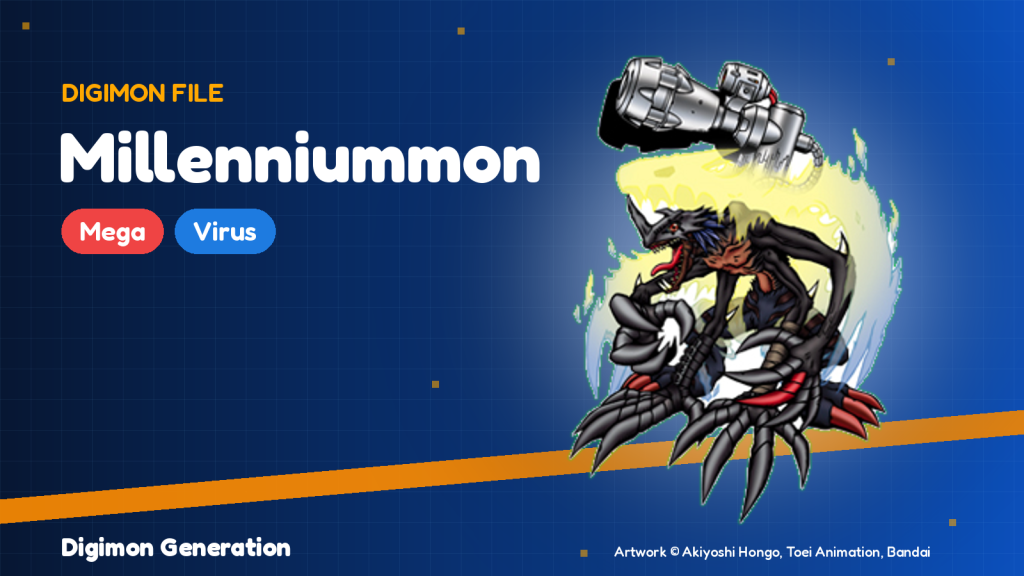
Millenniummon is a Mega level, Virus attribute Composite Digimon born from the fusion of Kimeramon and Machinedramon. It is best known as the recurring villain of the early WonderSwan “Tamer” games starring Ryo Akiyama, and its forms ZeedMillenniummon and Moon=Millenniummon carry its line further. This profile covers its file data, evolution lines by medium, attacks, appearances and the lore that makes it one of the strangest monsters in the franchise.
Who is Millenniummon
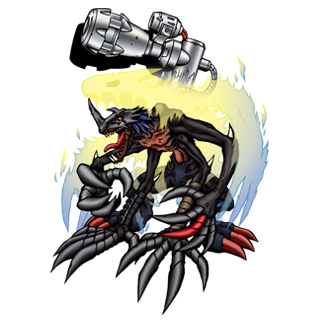
Millenniummon is what happens when two of the most feared villains from the early franchise get stitched together. Its official profile describes it as a Composite Digimon created by the fusion of Kimeramon and Machinedramon (Mugendramon). It is a patchwork creature with Kimeramon’s mismatched organic body and Machinedramon’s heavy mechanical weaponry bolted on. If you grew up on “digimon adventure” and its sequel, you’ll recognise both halves right away. Machinedramon was the metal tyrant of the Dark Masters, and Kimeramon was the stolen-parts abomination the Digimon Emperor built in Adventure 02.
Its Japanese name is Mireniamon (ミレニアモン), and the name is the clearest clue to its theme. The “millennium” part ties it to the year 2000 and the Y2K bug panic that dominated tech news while the franchise was booming. A Digimon is literally a living program, so a monster built around a catastrophic date-handling glitch is a perfect fit. Millenniummon carries a lot of time-themed concepts. Its moves bend time and freeze reality, and its whole line keeps returning to the idea of distorted timelines.
On levels: the English franchise calls it a Mega. In Japanese material that same level is called Ultimate (究極体). That matters when you read older fan translations, because “Ultimate” there means the top level, not the level below Mega.
Attribute and type at a glance
Millenniummon is Virus attribute. In the classic triangle used by the virtual pets and many games, Virus beats Data, Data beats Vaccine and Vaccine beats Virus. If you’re fighting Millenniummon in a game that uses this triangle, a strong Vaccine Mega is your natural answer. If you’re using it, it naturally pressures Data Digimon.
Its type is Composite (sometimes rendered as Chimera in older translations). That type groups Digimon assembled from multiple sources, and it’s a neat bit of continuity: Kimeramon, one of its two parents, is also Composite type.
Spelling: Millenniummon or Millenniumon?
You’ll see this Digimon spelled two ways online. Millenniummon with the double “m” is the official English spelling used by Bandai in modern products like the Digimon Card Game. Millenniumon is a fan romanisation that was common before official English names existed, and some long-running fan databases still title their pages that way. Both refer to the same monster. This site uses the official spelling.
Evolution line
Millenniummon has an unusual evolution line because its origin is a fusion rather than a normal climb from Rookie to Mega. How it’s reached and what it becomes depends heavily on the medium. Here’s what each source establishes.
Fusion origin (official profile)
| Component | Level | Attribute | Type | Famous as |
|---|---|---|---|---|
| Kimeramon | Ultimate | Data | Composite | Digimon Emperor’s creation in Digimon Adventure 02 |
| Machinedramon (Mugendramon) | Mega | Virus | Machine | Dark Masters leader in Digimon Adventure |
| Millenniummon | Mega | Virus | Composite | Fusion of the two above |
Notice something odd? Kimeramon is an Ultimate, yet the fusion lands at Mega. The profile frames Millenniummon as a merger of the two, so treat it as a fusion result rather than a simple level-up from Kimeramon. Millenniummon also inherits the Virus attribute from Machinedramon instead of Kimeramon’s Data.
Forms beyond Millenniummon
| Form | Level | How it relates | Where it’s prominent |
|---|---|---|---|
| Millenniummon | Mega | Base form, fused from Kimeramon and Machinedramon | WonderSwan Tamer games, later games, card game |
| ZeedMillenniummon | Mega | Further evolved, even more powerful form | WonderSwan sequels, later games, card game |
| Moon=Millenniummon | Mega | Alternate, Moon-themed form of the line | Later games and card game |
All three sit at the Mega level, so this isn’t a ladder in the usual sense. ZeedMillenniummon is presented as Millenniummon pushed even further, a darker and more dangerous version of the same entity. Moon=Millenniummon is a separate form within the same line. If you track lines on our “digimon evolution chart” page, this is one of the few families where several entries share the same level and the real progression is in power and story weight rather than level.
Evolution by medium
| Medium | How you get Millenniummon | What it leads to |
|---|---|---|
| Official profile / Reference Book | Fusion of Kimeramon and Machinedramon | ZeedMillenniummon, Moon=Millenniummon as related forms |
| WonderSwan Tamer games | Antagonist created through the fusion story | Returns as ZeedMillenniummon in the later games |
| Digimon Card Game | Played as a Mega level card; specific digivolve costs vary by printing | Supports Zeed and Moon forms in Millenniummon-themed decks |
| Digimon Story Time Stranger | Listed in the game’s roster; check the in-game evolution menu for exact requirements | Varies by game data |
Tamer tip
Because Millenniummon is a fusion Digimon in its lore, many games put it behind extra conditions beyond raw stats. Before you invest in a long training run, open the evolution tree and confirm whether the game wants a specific prior form like Kimeramon or Machinedramon on your path.
Millenniummon in Digimon Story Time Stranger
Millenniummon is part of the roster in “digimon story time stranger“, Bandai Namco’s 2025 entry in the Story series. If you’re browsing the full “time stranger digimon” lineup, you’ll find it among the late-game Megas. Time Stranger shows each Digimon’s evolution conditions inside its evolution menu, and those conditions mix stat thresholds with other requirements the game tracks as you progress. Personality also shapes how your partner’s stats grow, so it indirectly affects how quickly you hit the thresholds.
We’re keeping exact requirement numbers out of this profile until we’ve confirmed them directly in our own save, because getting a stat wrong costs you hours of grinding. If you’re new to how Time Stranger handles digivolution in general, our walkthrough on how to “evolve agumon digimon story” style lines covers the menu, reverting and how to plan a route toward a specific Mega.
How to plan a route to Millenniummon in Time Stranger
- Open Millenniummon’s entry in the evolution menu or field guide.
- Note every listed stat threshold and extra condition.
- Check which Ultimate forms point into it on the tree.
- Train a partner along that line and adjust personality for the stats you need.
- Revert and re-route if a requirement blocks you.
Signature attacks
Millenniummon’s official moves lean hard into its time and dimension theme. These two are its signature techniques in its profile.
| Attack | Japanese style name | What it does |
|---|---|---|
| Time Unlimited | Time Unlimited | Traps the opponent in a separate dimension where time works differently, sealing them away |
| Dimension Destroyer | Dimension Destroyer | Unleashes a burst of energy powerful enough to tear through dimensions |
Time Unlimited
This is the move that defines Millenniummon. Instead of simply blasting the target, it removes them from normal reality and locks them in a pocket dimension. It’s a perfect thematic match for a monster named after a date-based computer bug. In story terms it lets Millenniummon win fights without even needing to destroy its opponent, which is exactly the sort of cheat-code power you’d expect from a final boss.
Dimension Destroyer
Dimension Destroyer is the more straightforward destructive option. Rather than sealing the target away, it simply overwhelms them with raw, reality-shattering force. In games that translate attacks into elements and status effects, Millenniummon’s moves often show up as heavy special attacks rather than physical strikes, which suits a Digimon whose power is about warping reality more than brute force.
Inherited firepower
Millenniummon’s design carries Machinedramon’s cannons, and fans naturally connect those to Machinedramon’s own Infinity Cannon (Mugen Cannon). That’s a design inheritance, though, not one of Millenniummon’s listed signature attacks. When a game gives Millenniummon a cannon-style move, that’s the game’s own choice. Treat Time Unlimited and Dimension Destroyer as its true signature pair.
Appearances
Millenniummon is a game and print villain first and foremost. It has never been the central antagonist of a TV anime series, which surprises a lot of newer fans given how famous it is.
The WonderSwan Tamer games
Millenniummon’s most important role is in the WonderSwan games built around Ryo Akiyama, beginning with Digimon Adventure: Anode Tamer and Cathode Tamer in 2000. These were tactical RPGs set alongside the Adventure era. Ryo is pulled into the Digital World and fights to stop Millenniummon, and the follow-up WonderSwan titles kept that rivalry going, with ZeedMillenniummon escalating the threat.
These games matter far beyond their small original audience. Ryo was later brought into the anime as the “Legendary Tamer” in Digimon Tamers (2001), with Cyberdramon as his partner. The anime presents him as a Tamer with a long, mysterious history in the Digital World. Fans who played the WonderSwan games know that history centres on his battles with the Millenniummon line, so Millenniummon sits in the background of a major anime character even though it never takes the stage in that series.
Later games
Millenniummon has become a fixture in modern Digimon rosters, usually as a late-game Mega and often with its Zeed and Moon forms alongside. Its fusion origin makes it a popular “reward” Digimon in titles with branching trees, because getting there feels like assembling something forbidden.
The most current place to raise one is “digimon story time stranger“, where it appears as part of the Story series’ large Mega roster. If you want to see where it fits beside the rest of the cast, our “time stranger digimon” list shows the full lineup with pictures.
| Medium | Role | Notes |
|---|---|---|
| WonderSwan Tamer games (2000 onward) | Main antagonist | Ryo Akiyama’s nemesis; origin of its fame |
| Digimon Tamers anime (2001) | Background lore | Not a central villain; linked through Ryo’s backstory |
| Digimon Card Game | Playable card line | Millenniummon, ZeedMillenniummon and Moon=Millenniummon support |
| Digimon Story Time Stranger (2025) | Playable roster Digimon | Late-game Mega; requirements in evolution menu |
Digimon Card Game
Millenniummon has a real presence in the modern Digimon Card Game, and competitive players build dedicated decks around its line. The themed cards lean into the fusion idea and the Zeed and Moon forms. Card numbers and set codes change with every release, and its support has been spread across more than one product, so check the current official card list for the exact printings before you build. This profile won’t list specific cards we haven’t confirmed, since a wrong card number is worse than none.
Manga and print
Millenniummon’s time-bending, timeline-warping concept made it a natural fit for print stories tied to the early 2000s V-Jump era, the same publishing world that produced the V-Tamer manga and the WonderSwan games. Its print role is more niche than its game role. If you’re reading Japanese-only material, remember that Ultimate in those books means Mega.
Why Millenniummon works as a villain
A lot of Digimon bosses are just “big and evil.” Millenniummon is memorable because its design tells a story at a glance.
It’s a greatest-hits villain. Fusing Machinedramon and Kimeramon combined the scariest Mega from the first series with the most disturbing creation from the second. For kids watching in 2000, that was a dream-matchup monster from a game magazine.
It’s built on a real-world fear. The Y2K bug was a genuine global worry about computers failing when dates rolled over to 2000. Digimon are made of data, so a Digimon that embodies that bug is a natural horror concept for the franchise. It’s the digital world’s version of the apocalypse.
Its power is conceptual. Time Unlimited doesn’t just hit harder. It breaks the rules of the fight. That makes Millenniummon feel like a threat the heroes have to outthink rather than outmuscle, which is great boss design for a strategy game.
It keeps coming back. ZeedMillenniummon and Moon=Millenniummon give the line a sense of an entity that can’t be permanently deleted, fitting for something born from a timeline bug.
Millenniummon vs. its parts
If you’re deciding between raising Millenniummon or one of its components in a game, here’s the quick comparison by official file data.
| Digimon | Level | Attribute | Strong vs (classic triangle) | Weak vs (classic triangle) |
|---|---|---|---|---|
| Kimeramon | Ultimate | Data | Vaccine | Virus |
| Machinedramon | Mega | Virus | Data | Vaccine |
| Millenniummon | Mega | Virus | Data | Vaccine |
Millenniummon keeps Machinedramon’s matchup profile and adds the Composite type and time-themed moveset. Exact stats, resistances and elemental weaknesses are set per game, so compare inside the specific title you’re playing. A Millenniummon in one game can play very differently from one in another.
Tamer tip
Since Millenniummon is Virus, the classic counter is a Vaccine Mega. If a game lets you swap partners mid-fight, keep one Vaccine heavy hitter on the bench for Millenniummon-line bosses and use Millenniummon itself to farm Data-heavy areas.
Trivia
- Name origin: “Millennium” refers to the year 2000 and the Y2K bug, a theme reflected in its time-warping attacks.
- Two famous parents: It fuses Kimeramon from Digimon Adventure 02 and Machinedramon from Digimon Adventure, making it a crossover monster from the franchise’s first two anime.
- Level jump: Kimeramon is only Ultimate, but Millenniummon lands at Mega.
- Attribute inheritance: It takes the Virus attribute from Machinedramon instead of Kimeramon’s Data.
- Two spellings: “Millenniummon” is the official English spelling, while “Millenniumon” survives from older fan romanisations.
- Ryo connection: Its biggest legacy is as Ryo Akiyama’s nemesis in the WonderSwan games, which feeds directly into Ryo’s mysterious backstory in Digimon Tamers.
- A family of Megas: Millenniummon, ZeedMillenniummon and Moon=Millenniummon are all Mega, so the line grows in power and story weight rather than in level.
- Japanese level naming: In Japanese material its level is Ultimate (究極体), which equals Mega in English.
FAQ
What level is Millenniummon?
Millenniummon is a Mega level Digimon. Japanese sources call this level Ultimate, but it’s the same top tier the English franchise names Mega.
What does Millenniummon evolve from?
Its official profile says it’s born from the fusion of Kimeramon and Machinedramon (Mugendramon). Individual games can route it differently, so always check the evolution tree in the game you’re playing.
What does Millenniummon evolve into?
Its line includes ZeedMillenniummon and Moon=Millenniummon. Both are also Mega level, so they represent stronger and alternate forms of the same entity rather than a new level.
Is Millenniummon in the Digimon anime?
Millenniummon hasn’t been a central villain in a TV anime series. Its main home is the WonderSwan Tamer games, and it connects to the anime through Ryo Akiyama, who appears as the Legendary Tamer in Digimon Tamers.
What attribute is Millenniummon, and what beats it?
It’s Virus attribute. In the classic attribute triangle Vaccine beats Virus, so a strong Vaccine Digimon is your best counter in games that use that system.
Is Millenniummon in Digimon Story Time Stranger?
Yes, Millenniummon is in the Time Stranger roster as a late-game Mega. Its exact evolution conditions are listed in the game’s evolution menu, so plan your route there before you start training.
Why do some sites spell it Millenniumon?
That spelling comes from fan romanisations used before Bandai settled on official English names. The official spelling today is Millenniummon.