EX7 card list and key cards
EX7 is the short form of EX-07 Digimon Liberator, an Extra Booster for the Digimon Card Game built around the Digimon Liberator webcomic rather than any anime season. The set carries card numbers EX7-001 through EX7-074, plus parallel (alternate art) versions, and it is the first booster where Shoto Kazama and the Liberator cast headline the box instead of guest-starring. Here is what the set contains, how the card list is organised, which cards matter, and how to collect it without overpaying.
First, the right EX7
Type “ex7” into a search engine and you will see flashlights before you see Digimon. Nitecore makes a high-output rechargeable flashlight called the EX7, with USB-C charging, a clip, variable beam patterns and runtime charts that get reviewed to death on gear sites. That is a different product entirely. If you want lumens, brightness ratings and power cables, you are on the wrong page. If you want the Digimon Card Game set, keep reading.
Bandai writes the set code as EX-07 on Japanese packaging and EX07 or EX7 on English product listings and card numbers. All three refer to the same booster. On the cards themselves, the number prefix is simply “EX7”.
EX7 at a glance
| Detail | EX7 Digimon Liberator |
|---|---|
| Set code | EX-07 (Japan), EX07 / EX7 (English) |
| Product type | Extra Booster |
| Card numbers | EX7-001 to EX7-074 |
| Source material | Digimon Liberator webcomic |
| Japanese release | May 31, 2024 |
| English release | September 13, 2024 |
| Preceded by | EX6 Infernal Ascension |
| Followed by | EX8 Chain of Liberation |
Extra Boosters are the smaller sibling of the main BT booster line. Where a BT set runs to 112 numbered cards and covers a wide spread of archetypes, an EX set keeps to a smaller list and focuses on a tighter theme. For EX7 that theme is the Liberator cast and their partner Digimon, with the usual supporting cast of reprints and staple-style option cards to round out the colours.
How the EX7 card list is organised
Every Digimon Card Game booster follows the same numbering logic, and EX7 is no exception. Knowing the pattern lets you find any card on the official list in seconds.
Numbering by colour
Cards are numbered in colour order. Red comes first, then blue, yellow, green, black, purple, white, and finally the colourless or multi-colour tamers and options that close out the set. Within each colour, cards run from the lowest level up: Digi-Egg and Rookie cards sit at the top of a colour block and Megas sit at the bottom, followed by that colour’s tamers and option cards.
So if you are hunting a yellow Mega from EX7, scan the middle of the list. A purple option card lives near the end. The official EX-07 card list page on the Digimon Card Game site lets you filter by colour, card type, level and rarity, which is faster than scrolling once you know the layout.
Rarity tiers
| Rarity | Marking on card | What it means in EX7 |
|---|---|---|
| Common (C) | C | Bulk of the set, the low-level evolution pieces and basic options |
| Uncommon (U) | U | Mid-level Digimon, supporting tamers, utility options |
| Rare (R) | R | Stronger Champions and Ultimates, holofoil treatment |
| Super Rare (SR) | SR | The marquee Megas and the key tamer cards |
| Secret Rare (SEC) | SEC | A handful of chase cards beyond the SR slot |
| Parallel / alternate art | Same number, different art | Reprints of existing EX7 numbers with new illustrations |
Parallel cards keep the original card number. A parallel of EX7-030, for example, is still EX7-030 in a deck list and plays identically. Only the artwork, foil pattern and the price tag change. This matters for anyone building a competitive list on a budget: you never need the parallel to play the card.
Reading a card number properly
Three parts make up every number: the set prefix, the three-digit index, and sometimes a rarity suffix on English product descriptions. “EX7-012 R” tells you the card is from Digimon Liberator, is the twelfth card in the list (so almost certainly red or blue), and is a Rare. The suffix never appears in the number printed on the card. Card number plus name is all you need when registering a deck at an event.
The Digimon Liberator connection
Digimon Liberator is a webcomic that Bandai publishes on the official Digimon Card Game website, released in both English and Japanese from spring 2024 onwards. It is a card game story first. The characters play the Digimon Card Game, and the comic follows the matches, so the cards in EX7 mirror what the characters actually put on the table.
Three names carry the story:
- Shoto Kazama is the newcomer protagonist. He enters a virtual space where the card game is played with Digimon rendered around the players, and he learns the game as the reader does.
- Arisa is Shoto’s classmate and his early sparring partner, with a very different play style.
- Owen Dreadnought is the established top player who sets the bar Shoto has to reach.
A mysterious guide character named Zenith accompanies Shoto through the virtual world, and the comic steadily reveals why that world exists at all. If you have read the “digimon adventure” era material and expect a save-the-world plot with Digimon partners, adjust your expectations: Liberator treats the card game itself as the world, closer in spirit to a sports manga than to the anime.
The first Liberator cards actually arrived in BT17 Secret Crisis, where the cast appeared alongside the main set’s archetypes. EX7 is where they take centre stage, and EX8 Chain of Liberation continues the story’s second arc. If you are collecting the Liberator cast specifically, you want all three sets, with EX7 as the core.
Key cards: Shoto’s Pulsemon line
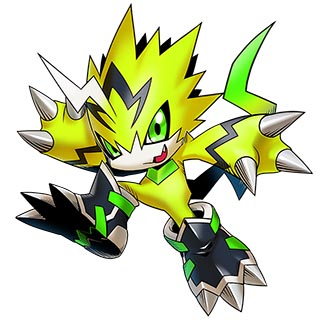
Shoto Kazama’s deck in the webcomic is built on the Pulsemon evolution line, which makes it the natural flagship of EX7 for anyone who came to the set through the comic.
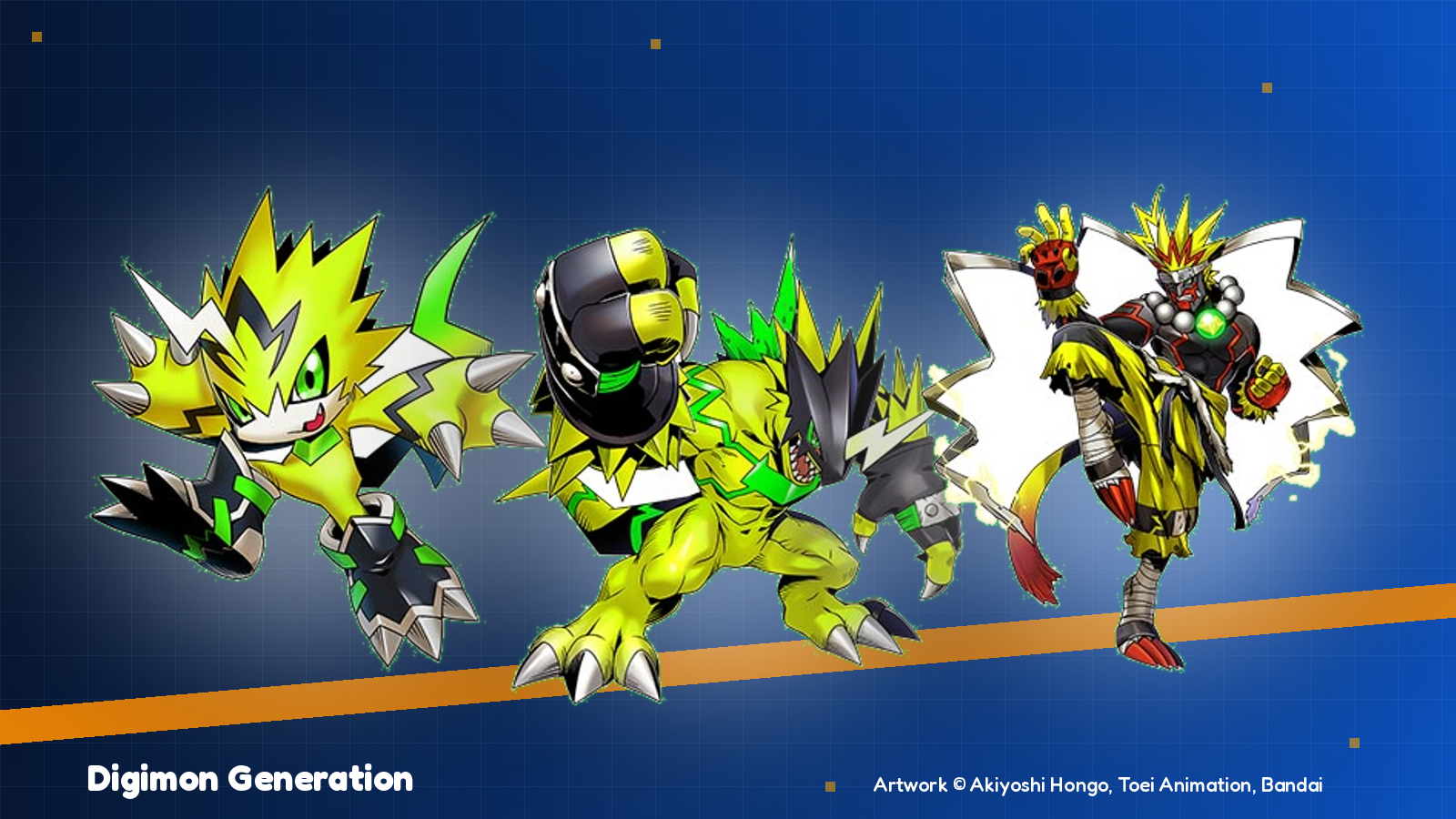
Pulsemon is a Vital Bracelet creation, not an anime one. It arrived in 2021 as the mascot of Bandai’s fitness-tracker toy, and its whole design language is about heartbeats, electricity and training. The Digimon Reference Book sets out the line as follows.
| Stage | Digimon | Level (Reference Book) | Card game level |
|---|---|---|---|
| Rookie | Pulsemon | Child | Lv.3 |
| Champion | Bulkmon | Adult | Lv.4 |
| Ultimate | Boutmon | Perfect | Lv.5 |
| Mega | Kazuchimon | Ultimate | Lv.6 |
A quick note on the Japanese terms in that table, because they trip up new Tamers constantly. “Child” is Rookie, “Adult” is Champion, “Perfect” is Ultimate, and the Japanese “Ultimate” is the English Mega. The English card game prints Lv.3 to Lv.6 on the cards, so the number is the safest thing to go by when you are sorting a pile.
The line reads like a training montage. Pulsemon is a small electric beast, Bulkmon bulks up into a muscular brawler, Boutmon is a cybernetic boxer, and Kazuchimon finishes as an armoured thunder god. In the “digimon tcg“, Shoto’s tamer card and the line’s level-matched evolutions are designed to chain together cleanly, which is exactly what you see on the page when Shoto plays.
Tamer tip
Pulsemon, Bulkmon, Boutmon and Kazuchimon were first printed for the card game in BT17 Secret Crisis, not EX7. If you are assembling a full Shoto playset, pull the BT17 printings too and compare the card text line by line, because the two sets give the line different effects rather than simple reprints.
Looking for Pulsemon’s place among the wider families? Our “digimon evolution chart” covers the major anime and game lines, and the Pulsemon branch is one of the newest additions to it.
Key cards: how to spot what matters on the list
Beyond the headline line, the cards in an EX set that hold value and see play follow predictable patterns. Use these when you are scanning the EX7 list for the first time.
Tamer cards
Shoto Kazama (EX7-064), Arisa Kinosaki (EX7-063) and Yuuki (EX7-065) each get tamer cards in EX7. Tamers in this game are the engine that converts memory into tempo, and the Liberator tamers are written to support the specific lines their owners play. A tamer that gives memory on a specific colour’s evolution, or lets you dig for a named Digimon, becomes the most played card in that deck. Check the tamer cards first when you open the list.
Level 6 Megas with on-evolution effects
The SR slot in any EX set belongs to the Megas. The ones that see play are the ones whose evolution effect swings a board immediately: deleting an opposing Digimon, unsuspending for a follow-up attack, or recovering a security card. A Mega with a big attack number and no on-play text is a collector piece, not a competitive one.
Option cards with a free play condition
Options that cost nothing under the right condition are the quiet staples of every set. Look for the phrase “if you have a Tamer in play, you can play this card without paying its cost” or a similar clause. Those cards cross over into decks that have nothing to do with the Liberator theme.
Reprints
EX sets always carry a block of reprinted evolution pieces so the new lines are playable straight out of the box. These are commons and uncommons, often already in your binder from BT sets, and they are the reason a single EX7 box can produce a working deck.
How to find any EX7 card on the official list
- Open the Digimon Card Game site and select the card list.
- Choose EX-07 Digimon Liberator from the set filter.
- Narrow by colour, then by level or card type.
- Click the card to read full effect text and inherited effects.
- Note the number (EX7-xxx) for your deck registration.
Pack and box structure
Japanese and English boosters are packaged differently, and the difference changes how you should buy.
| Market | Cards per pack | Packs per box | Notes |
|---|---|---|---|
| Japan | 6 | 24 | Smaller packs, boxes guarantee a spread across rarities |
| English | 12 | 24 | Double the cards per pack, so a box is a far larger slice of the set |
Because English packs hold twelve cards, a single English box tends to deliver a near-complete common and uncommon set and most of the rares. Japanese boxes are cheaper per pack but you will need more of them to finish the same collection. For a 78-card set, one English box plus a few targeted singles is the most efficient route to a full playset of everything below SR.
Two further points on collecting:
- Parallels are the price driver. The ordinary SR of a popular Mega might be affordable, while the parallel with the webcomic-style illustration costs several times more. Decide early whether you are collecting art or building a deck.
- Sealed product pricing moves with the meta. EX sets that spawn a competitive deck spike after a major event and settle a few months later. Buying the singles you need right after release, before any deck proves itself, is usually the cheapest window.
Tamer tip
Japanese EX7 and English EX7 cards are legal in different event circuits. Most English-language tournaments require English-printed cards, and Japanese events the reverse. Check your local organiser’s rules before you import a cheap Japanese box expecting to play with it.
Where EX7 sits among the Extra Boosters
Each Extra Booster has a distinct identity, and EX7 is the first one tied to an original card game story rather than to an existing anime or to a broad mechanical theme.
| Set | Name | Theme |
|---|---|---|
| EX1 | Classic Collection | Nostalgia set reviving early Digimon from the 1990s card era |
| EX2 | Digital Hazard | Digimon Tamers, Guilmon and the Hazard lines |
| EX3 | Draconic Roar | Dragon Digimon across every colour |
| EX4 | Alternative Being | X Antibody Digimon and alternate forms |
| EX5 | Animal Colosseum | Beast Digimon and a sports-tournament feel |
| EX6 | Infernal Ascension | Seven Great Demon Lords and their servants |
| EX7 | Digimon Liberator | The Liberator webcomic cast and partners |
| EX8 | Chain of Liberation | Liberator’s second arc |
Seen in that list, EX7 marks a turning point. Before it, Extra Boosters borrowed their story from somewhere else. From EX7 onwards, Bandai has a story it owns outright and can write cards for directly, which is why Liberator’s characters recur in later sets and promos.
Why EX7 is worth your time even if you have not read Liberator
You do not need the webcomic to enjoy the set. Three things make EX7 valuable on its own terms.
First, it is one of the easiest sets to complete. Seventy-eight cards, with heavy reprint support at common, means a casual collector can finish the base set from a single English box and a few trades.
Second, the Pulsemon line is a genuinely different flavour. Most Digimon decks lean on anime royalty like Agumon or Guilmon. Building around a Vital Bracelet mascot with a boxing gimmick is refreshing, and the artwork across the line is some of the best in the game’s recent sets.
Third, it is a good on-ramp for new players. The characters in the comic are learning the game, and the set’s cards are designed to show clean evolution chains and simple tamer synergy. If a friend wants to try the card game after playing “digimon story time stranger” or another recent video game, EX7 plus a starter deck is a gentle introduction that does not demand reading five years of card text.
Common mistakes with EX7
- Confusing BT17 and EX7 printings of the same Digimon. Same name, different number, different effect. Always quote the number.
- Treating parallels as different cards. They are not. The deck limit of four copies counts parallels and normal versions together.
- Assuming “EX7” is only one product. The code refers to the booster, but Bandai also sells boxes, cases and sometimes a related promo pack. Listings that just say “EX7” usually mean a booster box, so read the quantity before you pay.
- Buying Japanese for an English event. Covered above, and still the most common collector regret.
FAQ
What does EX7 stand for in the Digimon Card Game?
EX7 is the card number prefix for EX-07 Digimon Liberator, the seventh Extra Booster. The set runs from EX7-001 up to EX7-074, with 78 distinct cards in total once the four special cards are counted.
Is EX7 based on an anime?
No. It is based on Digimon Liberator, a webcomic that Bandai publishes on the official Digimon Card Game website. The story follows Shoto Kazama, Arisa and Owen Dreadnought playing the card game in a virtual world.
Which Digimon is the face of EX7?
Shoto Kazama’s Pulsemon line, running Pulsemon, Bulkmon, Boutmon and Kazuchimon. The Digimon Reference Book lists them as Child, Adult, Perfect and Ultimate, which translate to Rookie, Champion, Ultimate and Mega in English.
How many cards are in EX7?
The set contains 78 cards in total: 74 new cards plus 4 special cards, with the highest card number being EX7-074. Parallel alternate-art versions share the same numbers and do not add to that total.
When was EX7 released?
The Japanese booster launched on May 31, 2024, with the English version following on September 13, 2024.
Do I need EX7 to play Liberator characters?
EX7 is the main set for them, but the cast first appeared in BT17 Secret Crisis and continues in EX8 Chain of Liberation. A full Liberator collection spans all three.
Is the EX7 flashlight related to the Digimon set?
No. The Nitecore EX7 is a rechargeable flashlight that happens to share the name. The Digimon set is EX-07 Digimon Liberator, and nothing about the two products overlaps beyond the search results.