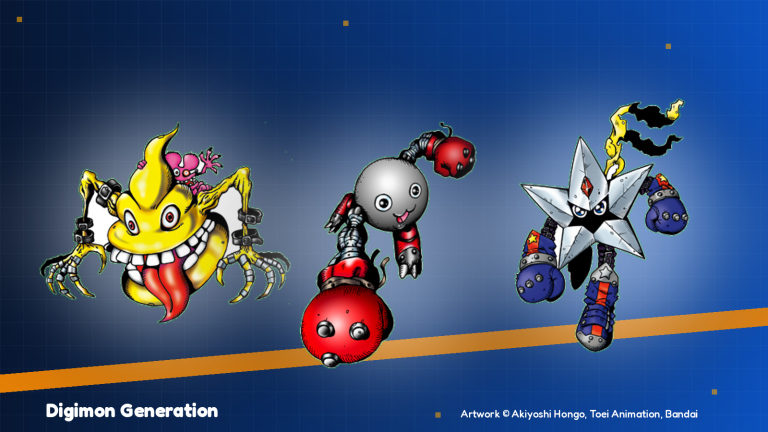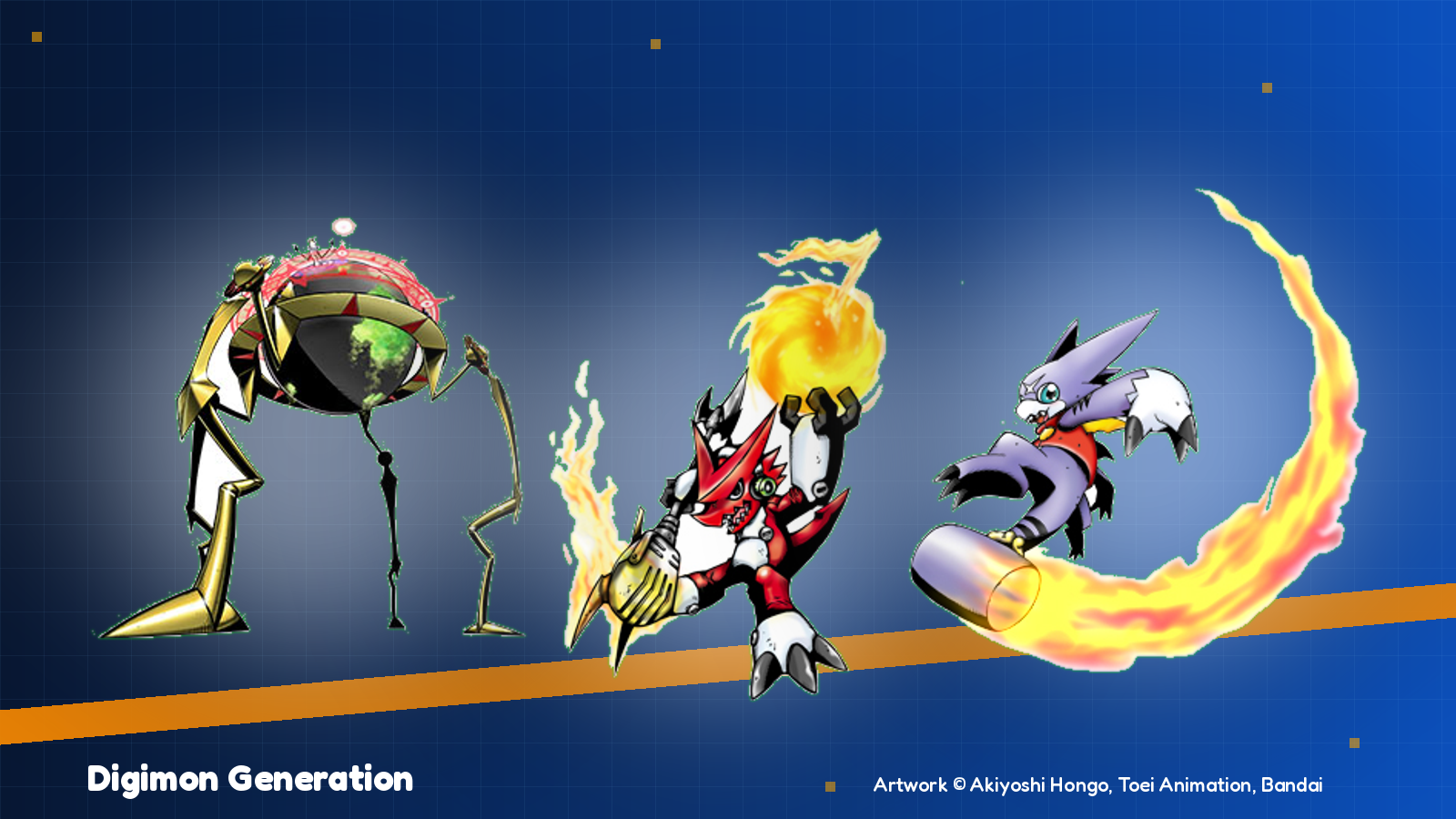
Digimon Xros Wars Digimon list
The Xros Digimon are the cast of Digimon Xros Wars, the 2010 to 2012 anime that Saban Brands dubbed in English as Digimon Fusion. Shoutmon and Taiki Kudo’s team, Xros Heart, lead the show, opposed by the Bagra Army. This list sorts the major Digimon by team, gives the Japanese and dub names together, and explains the DigiXros fusions that make this series play differently from every other Digimon anime.
What “Xros” means and why this series feels different
“Xros” is pronounced “cross.” The X stands in for the word, the same way it does on a road sign, and the Japanese title is Digimon Kurosu Wōzu. The name points straight at the show’s central mechanic: Digimon don’t mainly digivolve here. They cross, or fuse, with each other through a device called the Xros Loader. That process is DigiXros, which the English dub calls DigiFuse.
The first time I watched Xros Wars, that change threw me. I’d grown up on Adventure, where Agumon becoming Greymon is a rite of passage. In Xros Wars, Shoutmon gets stronger by bolting his friends onto himself, and the fusion names tell you how many Digimon are involved: Shoutmon X2, X3, X4 and so on. Our guide to what digivolution is and how Digimon evolve covers the classic system if you want a refresher before diving into fusions.
The other big difference is scale. A Xros Loader can store dozens of Digimon at once, so each human leads an army instead of a single partner. That turns the series into a war story about recruiting allies across a broken Digital World, and it’s why a list of Xros Digimon is longer than the cast list of most other seasons.
Digimon Xros Wars at a glance
Toei Animation produced the series for TV Asahi. It ran 79 episodes split across three arcs, and the third arc changes the main cast enough that many fans treat it as its own show.
| Arc (Japanese title) | Episodes | Original Japanese broadcast | New lead partner |
|---|---|---|---|
| Digimon Xros Wars | 1 to 30 | July 2010 to March 2011 | Shoutmon (Taiki Kudo) |
| Digimon Xros Wars: The Evil Death Generals and the Seven Kingdoms | 31 to 54 | April 2011 to September 2011 | Shoutmon (Taiki Kudo) |
| Digimon Xros Wars: The Young Hunters Who Leapt Through Time | 55 to 79 | October 2011 to March 2012 | Gumdramon (Tagiru Akashi) |
The English dub, Digimon Fusion, premiered on Nickelodeon in September 2013. Saban rewrote names, music and plenty of dialogue, so I’ll flag dub names throughout. If you search a wiki for “Mikey Kudo” and find “Taiki Kudo,” you’re reading about the same boy.
How DigiXros works (and why levels get fuzzy)
DigiXros is simple on screen. A human holds up the Xros Loader, calls the Digimon involved, and they merge into one new form that carries pieces of each member. Shoutmon X3 literally wears Dorulumon’s drill and Ballistamon’s armor.
That has a side effect on levels. Fusion forms like Shoutmon X4 don’t slot neatly into the In-Training, Rookie, Champion, Ultimate, Mega ladder, because the anime itself barely mentions levels. Bandai’s official Digimon Reference Book assigns levels to many species after the fact, and classic Digimon that turn up in the series keep their usual ones: Greymon is a Champion, Knightmon an Ultimate, and Beelzemon and Lilithmon are Megas. For a lot of fusion forms, though, the show cares more about how many friends are stacked together than about the level name.
Classic digivolution does return later. The Hunters arc brings Digimon evolution back into the story, which is how Tagiru’s Gumdramon becomes Arresterdramon and how Shoutmon finally gets a true evolved form, OmegaShoutmon. For how the classic lines connect across the franchise, our Digimon evolution chart lays out every major line.
Xros Heart (Fusion Fighters in the dub)
Xros Heart is the hero team, built around Taiki Kudo and his red Xros Loader. Taiki is a boy who can’t leave someone in trouble alone, and that trait is the whole reason he gets pulled into the Digital World. He doesn’t fight with a single partner. He leads, and Shoutmon is his front-line general.
The human members
- Taiki Kudo (Mikey Kudo): leader and Xros Loader holder. His big skill is reading a battle and choosing which Digimon to fuse.
- Akari Hinomoto (Angie Hinomoto): Taiki’s childhood friend, who keeps the group grounded and looks after the Digimon who aren’t fighting.
- Zenjirou Tsurugi (Jeremy Tsurugi): a kendo-practicing classmate who desperately wants to be useful and ends up as the comic heart of the human trio.
Shoutmon, the face of the series
Shoutmon is a small red dragon who swings a microphone stand like a weapon and talks about becoming King of the Digital World every chance he gets. That dream isn’t just a catchphrase. The plot of the first arc is about Code Crowns, the treasures held in each Zone of the shattered Digital World, and gathering them is the path to becoming king. Shoutmon wants it for good reasons. The Bagra Army wants it for conquest.
What I love about Shoutmon is that he’s a rock star with a leader’s chip on his shoulder. He’s loud, stubborn and sometimes wrong, and Taiki has to rein him in. He also sits at the center of almost every major fusion, so he’s the Digimon you’ll see on screen more than any other across all 79 episodes.
The Xros Heart Digimon roster
| Digimon (Japanese name if different) | What they bring to Xros Heart | Key fusion role (anime) |
|---|---|---|
| Shoutmon | Leader, would-be king, microphone-swinging brawler | Core of every Shoutmon X form |
| Ballistamon (Ballistamon) | Gentle, music-loving robot with heavy armor | Joins Shoutmon to make Shoutmon X2 |
| Dorulumon (Dorulumon) | Drill-equipped wolf, the team’s sharpest fighter | Adds his drill in Shoutmon X3 |
| Starmon | Cocky star-shaped warrior who leads the Pickmons | Fuses in for Shoutmon X4 |
| Pickmons | Swarm of tiny star Digimon | Fuse with Starmon into Shoutmon X4 |
| Cutemon | Pint-sized healer | Support rather than fusion |
| Knightmon and PawnChessmon | Disciplined knight with a squad of pawns | Knightmon powers Shoutmon X4K |
| Beelzemon | Lone gunslinger who joins on his own terms | Fuses for Shoutmon X4B |
| Sparrowmon | Fast flyer | Gives Shoutmon X5 its wings |
| Mervamon | Powerful warrior ally with a snake-headed arm | Front-line support |
I’ve stuck to the characters who matter to the story. The Xros Loader carries far more Digimon than this, including crowds of minor recruits who pop out for a single episode and get folded into a fusion.
The Shoutmon DigiXros chain
The numbered Shoutmon forms are the backbone of the first arc. Each new number marks a new friend joining the stack, and the anime treats each step as a story milestone as much as a power-up.
How Shoutmon reaches Shoutmon X4 in the anime
- Shoutmon fuses with Ballistamon to become Shoutmon X2.
- Dorulumon joins Shoutmon and Ballistamon to form Shoutmon X3.
- Starmon and the Pickmons join Shoutmon X3 to form Shoutmon X4.
| Fusion form | Built from (anime) | Why it matters |
|---|---|---|
| Shoutmon X2 | Shoutmon + Ballistamon | First proof that DigiXros beats raw strength |
| Shoutmon X3 | Shoutmon + Ballistamon + Dorulumon | The drill gives Xros Heart a real heavy hitter |
| Shoutmon X4 | Shoutmon X3 + Starmon + Pickmons | The classic “full team” look most fans picture |
| Shoutmon X4K | Shoutmon X4 + Knightmon | A knightly, sword-focused variant |
| Shoutmon X4B | Shoutmon X4 + Beelzemon | Adds Beelzemon’s firepower and dark edge |
| Shoutmon X5 | Shoutmon X4 + Sparrowmon | Takes the fight into the air |
Shoutmon X4 is the one I’d call iconic. When Xros Wars toys and card art show Shoutmon looking armored and huge, it’s usually X4 or a variant of it. Beyond these, the later arcs keep stacking: Shoutmon X7 unites Taiki’s forces with Kiriha’s, and it’s the fusion the series treats as the ultimate expression of two rival armies finally fighting as one.
Blue Flare
Blue Flare is the team of Kiriha Aonuma (Christopher Aonuma in the dub), who carries a blue Xros Loader and starts the series as Taiki’s rival. Kiriha is everything Taiki isn’t. He’s cold, ruthless about strength, and treats his Digimon like an arsenal to be optimized. Where Taiki recruits anyone who needs help, Kiriha only wants Digimon that win fights.
His core Digimon are Greymon and MailBirdramon. Kiriha’s Greymon is blue rather than the classic orange, which makes him instantly recognizable, and longtime fans get a little jolt seeing the Adventure-era species reimagined as a cool rival’s ace. In Bandai’s reference material, Greymon is a Champion and MailBirdramon an Ultimate, and Kiriha fuses them into his own heavyweight forms.
Blue Flare’s arc is the best character work in the first season. Kiriha’s toughness comes from a past betrayal, and watching him slowly admit that Taiki’s “friends first” approach makes armies stronger is the emotional payoff of the rivalry. By the time Shoutmon X7 appears, the rival teams are fusing their Digimon instead of competing for them.
Twilight
The third Xros Loader team is Twilight, fronted by Nene Amano, a popular teen idol in the human world. Nene starts out playing both sides, popping up in battles with her own agenda and leaving Taiki and Kiriha unsure whether she’s friend or enemy.
The reason she’s so guarded is her younger brother, Yuu Amano. DarkKnightmon (AxeKnightmon in the dub) holds power over Yuu, which forces Nene to cooperate with him. That makes Twilight less a true third side and more a hostage situation dressed up as a team. Nene’s best-known Digimon are the MonitaMon, a group of TV-screen-headed Digimon who act as her scouts and spies, a fun touch for an idol whose career is built on cameras.
Nene’s turn toward Xros Heart is one of the arcs I’d point newcomers to when they ask whether Xros Wars has depth. She’s sharp, she’s sympathetic, and she carries the guilt of choices she made under pressure. Yuu also matters long term: he becomes a lead in the Hunters arc with his own partner.
The enemies: Bagra Army, Death Generals and Quartzmon
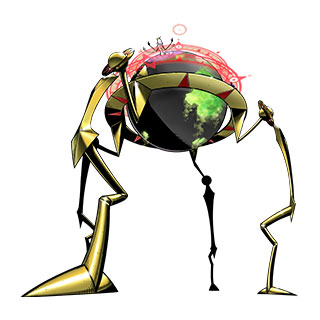
Xros Wars has a big villain roster because the Digital World is split into Zones and each one needs a local threat. Here are the antagonists the story actually builds around.
The Bagra Army (first arc)
The Bagra Army is the imperial force conquering the Zones and racing Xros Heart for the Code Crowns. At the top sits Bagramon (Lord Bagra in the dub), a scheming emperor who prefers manipulation to brute force.
Under him, three commanders do most of the heavy lifting:
- Tactimon: a disciplined samurai-style general who fights with strict honor and a sealed sword.
- Blastmon: a hulking crystal Digimon who’s as greedy as he is strong.
- Lilithmon: one of the Seven Great Demon Lords, a Mega-level Virus in Bandai’s reference material, who serves Bagramon while plotting for herself.
Early in the series, MadLeomon is the first major Bagra threat Taiki faces in the Green Zone. He’s a great starter villain because he shows how the Bagra Army treats ordinary Digimon: as resources to crush.
DarkKnightmon and the Death Generals (second arc)
The second arc, The Evil Death Generals and the Seven Kingdoms, raises the stakes. DarkKnightmon steps out of the shadows as a central villain, and the Bagra Army’s Death Generals each rule a kingdom that Xros Heart has to break open. This is the arc where the Bagra story reaches its climax.
Quartzmon (Hunters arc)
The Hunters arc swaps the war for a mystery. Quartzmon is the final villain, a being tied to DigiQuartz, the strange in-between space where Digimon slip into the human world. Quartzmon’s whole design is about absorbing and copying, which makes the finale feel like a threat to the entire franchise rather than one Digital World.
| Villain (dub name if different) | Arc | Role |
|---|---|---|
| MadLeomon | First | First major Bagra threat in the Green Zone |
| Tactimon | First | Honor-bound Bagra general |
| Blastmon | First | Crystal brute and Bagra general |
| Lilithmon | First and second | Demon Lord serving and scheming |
| Bagramon (Lord Bagra) | First and second | Emperor of the Bagra Army |
| DarkKnightmon (AxeKnightmon) | First and second | Manipulator behind Twilight, central second-arc villain |
| Quartzmon | Hunters | Final villain tied to DigiQuartz |
The Hunters arc: Xros Digimon, the next generation
The Young Hunters Who Leapt Through Time jumps ahead to a new lead and a new idea. Digimon have started appearing in the human world through DigiQuartz, and kids “hunt” them with Xros Loaders, catching them to recruit into their own teams. Taiki is now a legendary figure, and the new protagonist wants to live up to him.
The new humans and partners
| Human | Partner Digimon | Notes |
|---|---|---|
| Tagiru Akashi | Gumdramon | Hot-headed lead who idolizes Taiki; Gumdramon evolves into Arresterdramon |
| Yuu Amano | Damemon | Nene’s brother returns as a lead with his own partner |
| Ryouma Mogami | Psychemon | Calculating hunter and Tagiru’s early rival |
| Taiki Kudo | Shoutmon | Veteran mentor; Shoutmon reaches OmegaShoutmon |
Gumdramon is a small purple dragon with a long, bouncy tail and an ego to match Tagiru’s. Their pairing echoes the original Taiki and Shoutmon dynamic, but rougher around the edges. Gumdramon’s evolution into Arresterdramon is the arc’s headline transformation, and it signals clearly that classic digivolution is back.
Damemon is a gag character on the surface (“dame” means “no good” in Japanese), and Yuu’s journey with him is a quiet redemption story after what Yuu went through in the first arc. Psychemon gives Ryouma a sharp, cold partner that suits his early role as a calculating rival.
DigiMemories
Hunters added DigiMemories, items that call up older Digimon for a one-off assist in battle. It’s a clever bit of fan service because it gives classic species a cameo without derailing the plot, and it fits the arc’s theme of honoring the franchise’s past.
The legendary heroes finale
The Hunters finale is the reason many longtime fans sat through the whole run. The final battle brings back the goggle-wearing leads from earlier seasons with their partners: Tai and Agumon from Adventure, Davis and Veemon from Adventure 02, Takato and Guilmon from Tamers, Takuya from Frontier, and Marcus and Agumon from Data Squad. Seeing them stand with Taiki and Shoutmon is the closest the anime franchise got to a full crossover at that point.
Japanese names vs Digimon Fusion dub names
If you watch the dub and read Japanese wikis, the name changes get confusing fast. Here are the swaps that come up most.
| Japanese version | Digimon Fusion (English dub) |
|---|---|
| Digimon Xros Wars | Digimon Fusion |
| Xros Loader | Fusion Loader |
| DigiXros | DigiFuse |
| Xros Heart | Fusion Fighters |
| Taiki Kudo | Mikey Kudo |
| Kiriha Aonuma | Christopher Aonuma |
| Akari Hinomoto | Angie Hinomoto |
| Zenjirou Tsurugi | Jeremy Tsurugi |
| Bagramon | Lord Bagra |
| DarkKnightmon | AxeKnightmon |
Most Digimon species keep their names in the dub. Shoutmon, Ballistamon, Dorulumon, Cutemon, Tactimon and the rest are the same, and so are Blue Flare and Twilight, which keeps things manageable. The big changes are the humans, the device and the fusion command.
Tamer tip
When you look up a Xros Wars character online, search the Japanese name first. Fan databases and Bandai’s reference material file everything under the Japanese names, so “Taiki Kudo” turns up far more than “Mikey.”
Xros Digimon in games, manga and the card game
The anime isn’t the only place these Digimon live, and the details shift between versions, so here’s which medium is which.
The Nintendo DS games
The series got its own games, Digimon Story: Super Xros Wars Blue and Digimon Story: Super Xros Wars Red, released for the Nintendo DS in Japan in 2011. They’re paired versions in the Pokémon style, built around the DigiXros idea, and they never got an official Western release. If you’re used to the modern Digimon Story games, these are a very different, more compact experience.
For a look at the newest entry in that line, our Digimon Story Time Stranger overview covers it in full, and our Time Stranger Digimon list shows its roster with pictures. Check a game’s own roster before assuming a Xros Wars favorite is in it, because inclusion changes from game to game.
The manga
Digimon Xros Wars also ran as a manga in Shueisha’s V Jump, drawn by Yuki Nakashima. It shares the core cast and the DigiXros concept but tells its own version of the story, so plot details from the manga don’t always match the anime.
The Digimon Card Game
The modern Digimon Card Game brought the fusion idea to the table. DigiXros arrived as a mechanic with the Xros Encounter booster (BT10), and Shoutmon and his teammates show up as cards built to stack together like the anime. Card stats, levels and effects follow the card game’s own rules, so don’t treat a card’s printed level as proof of what the anime says, and vice versa.
How I’d watch Digimon Xros Wars
Xros Wars is easy to watch in order because it’s one continuous story. The only real decision is dub or Japanese, and that matters more here than for most seasons because the dub changes so much.
| Order | What to watch | Episodes | Why |
|---|---|---|---|
| 1 | Digimon Xros Wars | 1 to 30 | Sets up Xros Heart, Blue Flare, Twilight and the Code Crown war |
| 2 | The Evil Death Generals and the Seven Kingdoms | 31 to 54 | Closes out the Bagra Army story |
| 3 | The Young Hunters Who Leapt Through Time | 55 to 79 | New leads, Digimon hunting and the legendary heroes finale |
My honest take: watch all three arcs. The first two are the core Taiki story, but the Hunters finale pays off years of franchise history, and it lands harder once you know Taiki’s journey. Streaming availability shifts by region and license, so check which official service carries the series where you live. Officially licensed releases are the way to support more Digimon getting made.
Xros Wars is part of the newer generation of Digimon anime that came after Tamers and Frontier. If you’re coming in from Adventure, expect a lighter, louder, more action-packed tone with a much bigger cast. It’s a Saturday-morning war epic, and once DigiXros clicks for you, it’s a blast.
FAQ
What does “Xros” mean in Digimon?
“Xros” means “cross” and is pronounced that way. The X replaces the word, and it refers to the DigiXros fusion mechanic, where Digimon combine through the Xros Loader instead of mainly digivolving.
Is Digimon Fusion the same as Digimon Xros Wars?
Yes. Digimon Fusion is the English dub of Digimon Xros Wars, produced by Saban Brands and premiered on Nickelodeon in September 2013. The dub renames the humans, the device (Fusion Loader) and the fusion command (DigiFuse), but most Digimon keep their names.
How many episodes does Digimon Xros Wars have?
The Japanese series has 79 episodes across three arcs: 30 in the first arc, 24 in the Death Generals arc (episodes 31 to 54) and 25 in the Hunters arc (episodes 55 to 79).
Who is the main Digimon in Xros Wars?
Shoutmon, partnered with Taiki Kudo (Mikey in the dub). He leads Xros Heart, dreams of becoming King of the Digital World and sits at the center of the Shoutmon X fusions. In the Hunters arc, Tagiru’s Gumdramon shares the spotlight.
Do Digimon digivolve in Xros Wars?
Not much in the first two arcs, where DigiXros fusion replaces classic evolution. The Hunters arc brings digivolution back: Gumdramon evolves into Arresterdramon and Shoutmon reaches OmegaShoutmon.
What’s the difference between Xros Heart, Blue Flare and Twilight?
They’re the three Xros Loader teams. Xros Heart is Taiki’s team of friends led by Shoutmon. Blue Flare is Kiriha’s strength-first army built around his blue Greymon and MailBirdramon. Twilight is Nene’s team, fronted by her but controlled through DarkKnightmon’s hold over her brother Yuu.
Do older Digimon heroes appear in Xros Wars?
Yes. The Hunters finale brings back the goggle-wearing leads from Adventure, Adventure 02, Tamers, Frontier and Data Squad with their partners to fight alongside Taiki and Shoutmon.